


What's Happening?
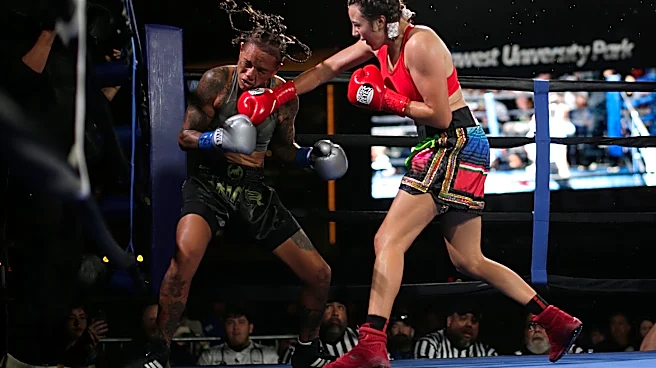
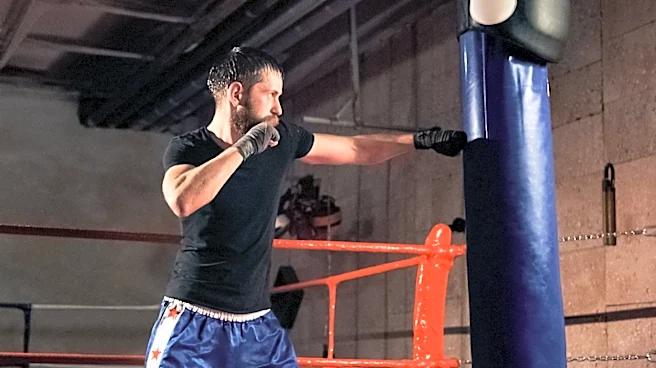
Micah Richards, a former professional footballer, has turned to boxing as a key component of his fitness routine following his retirement from the sport. Due to knee and back issues, Richards is unable to engage in traditional football activities such
as running or kicking a ball. These injuries, which once required him to drain fluid from his knee every three days, have led him to seek alternative methods to maintain his cardiovascular health. Boxing has become central to his regimen, allowing him to stay fit without exacerbating his injuries. Richards, who is known for his muscular build, has also been working on his boxing technique, despite acknowledging some limitations due to his knee condition. His training sessions have included working with Malik Scott, a coach known for training heavyweight boxer Deontay Wilder, who praised Richards for his strength and coordination.
Why It's Important?
Richards' shift to boxing highlights the adaptability required by athletes facing physical limitations post-retirement. This transition underscores the importance of finding sustainable fitness routines that accommodate health constraints while maintaining overall well-being. For Richards, boxing not only provides a cardiovascular workout but also helps him manage his weight and energy levels, especially after periods of decreased motivation and increased alcohol consumption. His experience reflects a broader trend among retired athletes who must navigate the challenges of staying fit without the structure and support of professional sports. This adaptation can serve as an inspiration for others facing similar challenges, emphasizing the value of exploring diverse fitness options to maintain health and vitality.
What's Next?
Richards' commitment to boxing as part of his fitness routine suggests a continued focus on maintaining his health and physique. As he refines his technique and adapts to his physical limitations, he may explore additional training methods or collaborate with other fitness professionals to enhance his regimen. His journey could also lead to increased public interest in boxing as a viable fitness option for those with similar constraints. Additionally, Richards' story may encourage other retired athletes to share their own fitness adaptations, fostering a community of support and innovation in post-career health management.