

What's Happening?
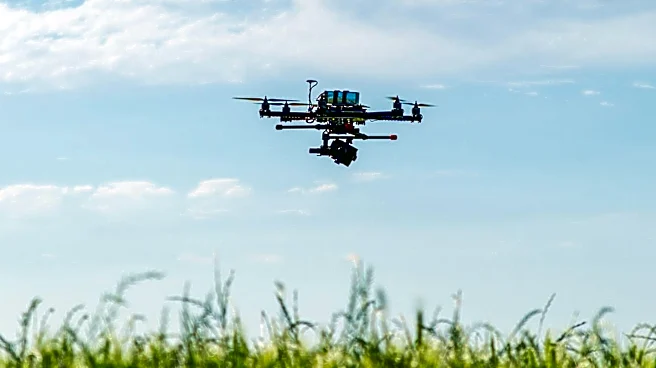
Agri Spray Drones (ASD) has announced its evolution from a spray drone distributor to an agricultural drone manufacturer and technology company. This strategic shift will see ASD leverage years of operator experience to develop its own products, focusing
on quality control, software, autonomous systems, and U.S. manufacturing. The company's first proprietary spray drone platform is already in production, with more details expected later this year. ASD's manufacturing roadmap includes phased domestic production: 2026 will involve U.S.-based quality control, small-batch assembly, select U.S.-designed components, and U.S.-based servers. By 2027, the company aims for full-scale assembly, U.S.-managed software, a new U.S.-designed frame, more U.S.-made electronics, and increased domestic component sourcing. The goal for 2028 is expanded U.S. sourcing of critical components, targeting at least 65% of the total drone cost to be made in the United States.
Why It's Important?
This transition by Agri Spray Drones is significant for the U.S. agricultural technology sector and broader manufacturing landscape. By moving towards domestic manufacturing and product development, ASD aims to gain greater control over quality, product design, and supply chain, directly addressing feedback from operators. This initiative supports the 'Made in USA' movement, potentially creating jobs and fostering technological independence in a critical industry. The emphasis on U.S.-managed software and autonomous systems also positions ASD to develop solutions tailored to the specific needs and regulatory environment of American agriculture. This move could enhance the reliability and serviceability of agricultural drones, which are becoming increasingly vital for precision farming, efficient crop management, and reducing manual labor. It also signals a growing trend of vertical integration within the ag-tech industry, where companies seek to control more aspects of their product lifecycle.
What's Next?
ASD plans to share additional details about its new spray drone platform later this year. The company's phased manufacturing roadmap outlines a clear progression towards increased U.S. content and assembly over the next three years, with a target of 65% U.S.-made components by 2028. Beyond the aircraft itself, ASD's longer-term vision includes building an increasingly autonomous spray operation, exemplified by its Drone Dock, which automates the refill process to reduce operator exposure to chemicals and increase operational efficiency. This suggests future innovations will focus on creating fully integrated autonomous systems rather than just individual drone units. The company will continue to rely on its nationwide dealer network, training programs, and technical support to gather operator feedback and inform product development. The success of this domestic manufacturing strategy could influence other agricultural technology companies to consider similar localization efforts.
Beyond the Headlines
Agri Spray Drones' commitment to U.S. manufacturing and technology development has deeper implications for national security and economic resilience. Reducing reliance on foreign supply chains for critical agricultural technology can mitigate risks associated with geopolitical tensions and trade disruptions. Furthermore, the development of advanced autonomous systems in agriculture can address labor shortages, improve efficiency, and enhance the sustainability of farming practices. The focus on operator feedback in product development highlights a user-centric approach that could lead to more practical and effective solutions for farmers. This shift also contributes to the broader digital transformation of agriculture, where data, automation, and artificial intelligence are becoming integral to modern farming. The ethical considerations around autonomous systems, data privacy, and the impact on agricultural employment will likely become more prominent as these technologies become more widespread.