
What's Happening?
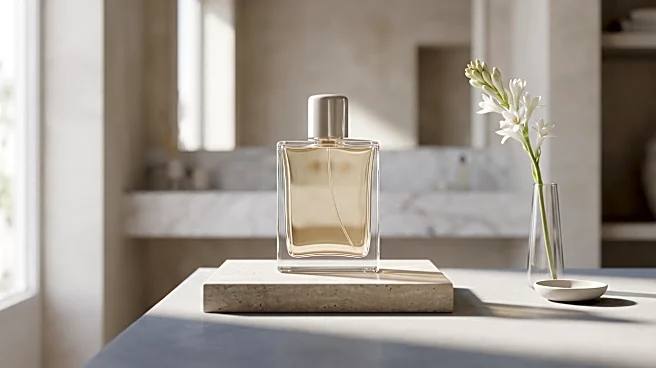
Max Mara's Le Parfum Eau de Parfum is being highlighted as a prime example of the 'quiet luxury' aesthetic. This fragrance is characterized by its understated, intentional, and minimal approach to elegance,
which does not seek to demand immediate attention. The perfume's design and scent profile prioritize subtle elegance over ostentation, featuring a blend of musky woods and soft tuberose. It is described as a scent that whispers rather than shouts, offering a gentle elegance that unfolds slowly and remains memorable without being overpowering. This aligns with the broader concept of quiet luxury, which emphasizes sophistication through subtlety and harmony, much like a carefully curated capsule wardrobe.
Why It's Important?
The emergence and popularization of 'quiet luxury' in products like Max Mara's fragrance reflect a broader shift in consumer preferences towards understated sophistication and quality over overt branding and flashy displays. This trend can influence various U.S. industries, particularly in fashion, beauty, and lifestyle sectors. For businesses, understanding and adapting to this aesthetic can be crucial for market relevance and consumer appeal. It suggests a potential gain for brands that focus on craftsmanship, timeless design, and subtle elegance, while those heavily reliant on loud branding or fast-fashion trends might need to re-evaluate their strategies. This shift also impacts consumer behavior, encouraging more thoughtful and intentional purchasing decisions, moving away from transient trends towards enduring value.
What's Next?
The continued embrace of the quiet luxury trend is likely to influence product development and marketing strategies across various consumer goods sectors. We may see more brands, particularly in the U.S., adopting similar design philosophies that prioritize subtlety, quality, and longevity. This could lead to an increase in products with minimal embellishments, refined aesthetics, and a focus on premium materials. Consumers might increasingly seek out items that offer a sense of understated sophistication and versatility, transcending specific occasions or fleeting trends. This trend could also foster a greater appreciation for classic styles and investment pieces, potentially impacting the lifecycle of consumer products and encouraging more sustainable consumption patterns.
Beyond the Headlines
The 'quiet luxury' movement extends beyond mere product aesthetics; it reflects deeper cultural and psychological shifts. It suggests a growing desire for authenticity and substance in a world often saturated with superficiality and constant demands for attention. Ethically, it can promote more sustainable consumption by valuing quality and longevity over disposability. Culturally, it challenges the notion that value is directly proportional to visibility or brand recognition, instead emphasizing intrinsic worth and personal discernment. This shift could lead to a re-evaluation of what constitutes 'luxury' in society, moving it from an external display of wealth to an internal experience of refined taste and thoughtful consumption. It also highlights a potential societal fatigue with overt consumerism, favoring a more discreet and personal expression of style and affluence.