




What's Happening?
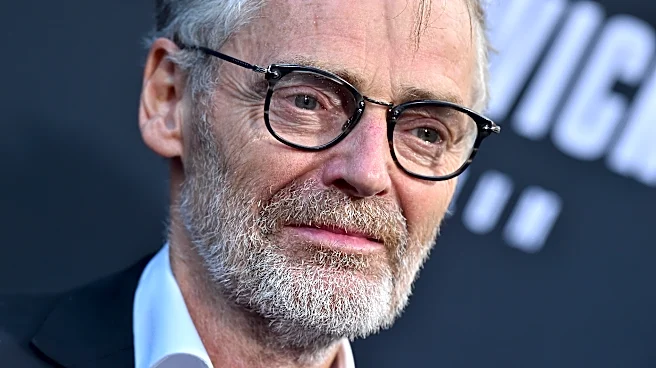
Veteran actor John Malkovich has offered a critical assessment of his extensive filmography, stating that the majority of his scripts are either 'noticeably fundamentally or deeply flawed.' Despite a career spanning over four decades and more than a hundred
films, Malkovich revealed on '60 Minutes' that only a select few screenplays meet his high standards. He specifically named 'Dangerous Liaisons,' 'Being John Malkovich,' 'The Killing Fields,' and 'Wild Horse Nine' as among the truly exceptional scripts he has encountered. This candid evaluation highlights his discerning perspective on screenwriting quality within Hollywood. His comments came while discussing 'Wild Horse Nine,' a film he initially considered one of his top five scripts, later adjusting his count to six. Malkovich acknowledged that even imperfect writing could yield interesting ideas and creative possibilities, but this was insufficient to earn his highest praise.
Why It's Important?
John Malkovich's critique is significant as it comes from an actor with a distinguished career and a reputation for selecting unique and challenging roles. His comments shed light on the perceived quality of screenwriting in Hollywood, suggesting a prevalent issue with script development even for established actors. This perspective could influence how aspiring screenwriters approach their craft, emphasizing the need for robust and well-developed narratives. For the film industry, such a high-profile critique might prompt introspection regarding script selection processes and the emphasis placed on story quality versus commercial viability. It also offers a rare glimpse into the artistic standards of a celebrated performer, potentially shaping audience expectations and critical discourse around film quality. The remarks underscore a broader conversation about artistic integrity in a commercialized industry.
What's Next?
While Malkovich's comments are a personal reflection rather than a call to action, they may spark further discussion within the film community about screenwriting standards. Directors, producers, and writers might consider these insights when developing future projects, potentially leading to a renewed focus on script quality. For Malkovich himself, this critical stance could inform his future role selections, leading him to prioritize projects with exceptionally strong narratives. Audiences and critics might also view his past and future work through the lens of these remarks, paying closer attention to the script's strength in evaluating films. The ongoing success of films like 'Wild Horse Nine,' which Malkovich praised, could further validate his discerning taste and encourage similar projects.
Beyond the Headlines
Malkovich's candidness touches upon a deeper artistic tension within Hollywood: the balance between creative vision and commercial pressures. His willingness to openly criticize the quality of scripts he has worked on, despite their potential for financial success or critical acclaim, speaks to a commitment to artistic excellence. This perspective challenges the notion that any script can be elevated by a strong performance, suggesting that foundational writing is paramount. It also raises questions about the agency of actors in shaping the quality of the projects they undertake. The ethical implication is whether actors have a responsibility to speak out against perceived artistic shortcomings, even if it means critiquing their own past work. Culturally, it reinforces the idea that true artistry demands rigorous standards, regardless of industry norms.