



What's Happening?
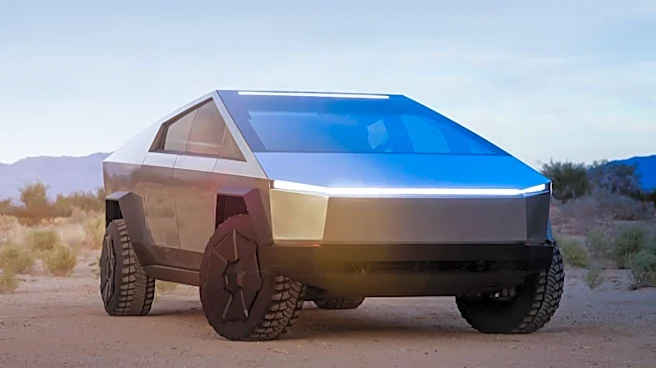
Tesla CEO Elon Musk has announced an extension of Cybertruck production through the end of summer 2027. This decision comes despite previously stated plans to wind down production in mid-2027 to prioritize the Cybercab robotaxi. Musk cited a significant
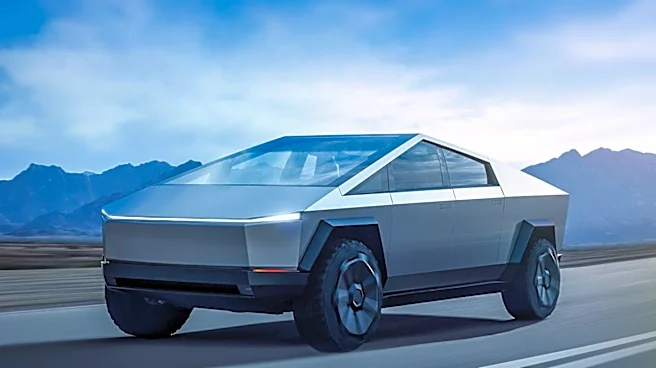
order backlog for the Cybertruck, stating that the order rate "far exceeds our production rate." However, Reuters reports persistently weak sales for the Cybertruck, with only 20,237 units sold in the U.S. last year, a 48% decrease from 2024. This figure is significantly lower than Musk's initial prediction of 250,000 annual sales. The Cybertruck, which debuted in 2019, has faced challenges including its angular design, difficulties in gaining approval for sale in key markets like Europe, and nearly a dozen recalls since deliveries began in 2023. Musk acknowledged that extending production might not be the most profit-maximizing move but attributed it to "sentimentality."
Why It's Important?
This extension of Cybertruck production highlights Tesla's ongoing struggle to balance innovation with market demand and profitability. The Cybertruck's performance is a critical indicator of Tesla's ability to diversify its product line beyond its established sedan and SUV models. Weak sales and production challenges for a high-profile vehicle like the Cybertruck could impact investor confidence and Tesla's overall market valuation. Furthermore, the decision to extend production for "sentimentality" rather than purely profit-driven reasons could raise questions about the company's strategic focus and resource allocation, especially as it aims to ramp up production of the Cybercab, which Musk has positioned as central to Tesla's autonomous-vehicle ambitions. The Cybertruck's reception also reflects broader consumer trends and the challenges of introducing radical designs into a competitive automotive market.
What's Next?
Tesla will continue to produce the Cybertruck until the end of summer 2027, aiming to clear the existing order backlog. This extended production period will likely involve efforts to address the vehicle's production complexities and potentially improve its market appeal. Concurrently, Tesla is expected to intensify its focus on the Cybercab robotaxi, which Musk views as a key future product. The company will need to demonstrate the commercial viability of the Cybercab to justify its strategic shift. The coming years will be crucial for Tesla to prove its ability to manage multiple ambitious projects, overcome production hurdles, and achieve its sales targets for both the Cybertruck and the Cybercab. The market will closely watch for updates on production rates, sales figures, and the progress of the Cybercab's development and deployment.
Beyond the Headlines
The Cybertruck's journey, from its unconventional unveiling to its extended production run, reflects a broader narrative about the intersection of technological innovation, consumer acceptance, and corporate strategy. The vehicle's polarizing design and the challenges it has faced in production and sales underscore the risks associated with disruptive product launches. Musk's reference to "sentimentality" in extending production suggests a deeper connection to the product beyond pure financial metrics, potentially influencing brand loyalty and public perception. This situation also highlights the evolving landscape of the automotive industry, where traditional manufacturing challenges are compounded by the complexities of electric vehicle technology and autonomous driving aspirations. The Cybertruck's long-term success or failure could serve as a case study for future ventures into radical vehicle design and production.