





What's Happening?
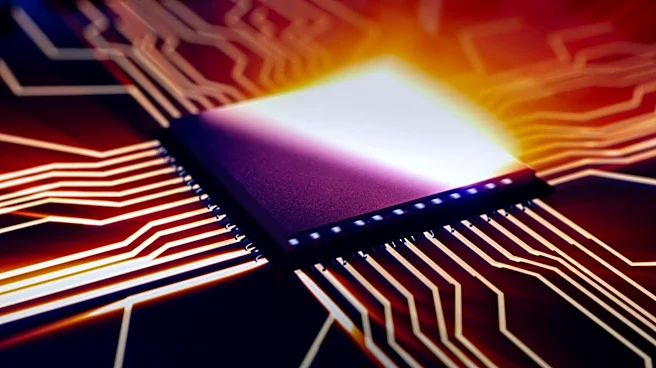
Li Auto, a Chinese electric vehicle manufacturer, is pursuing its first round of external financing for its chip subsidiary. The funding round aims to raise several billion yuan at a pre-money valuation of approximately 15 billion yuan ($2.22 billion).
This move signifies Li Auto's commitment to independently developing its semiconductor business, following the establishment of a dedicated chip company entity in July. The company's in-house chip team, comprising around 200 individuals, is focused on AI computing architecture, chip design, and software development. They are simultaneously working on both vehicle-side and cloud-side in-house chip projects. This strategy mirrors that of its peer, Nio Inc., whose chip subsidiary, GeniTech Co Ltd (Shenji), successfully completed a 2.257 billion yuan funding round in February.
Why It's Important?
This development highlights a growing trend among major EV manufacturers to internalize critical technology components, particularly semiconductors. By developing its own chips, Li Auto aims to gain greater control over its supply chain, enhance performance, and differentiate its products in a highly competitive market. The substantial pre-money valuation indicates strong investor confidence in the potential of in-house chip development within the EV sector. This could lead to increased innovation in automotive AI and computing, potentially setting new industry standards. For the broader U.S. automotive and technology sectors, this trend in China could signal future shifts in global supply chains and competitive landscapes, prompting U.S. companies to re-evaluate their own strategies for semiconductor independence and technological leadership.
What's Next?
Li Auto plans to raise several billion yuan in this funding round, which will likely be used to further accelerate its chip research and development efforts. The company is also exploring the possibility of selling its in-house developed components, such as chips and silicon carbide modules, to external manufacturers, indicating a potential diversification of its business model. This could transform its chip subsidiary into a significant player in the broader semiconductor market. The success of this funding round and the subsequent development of its chip technology will be closely watched by competitors and investors, as it could influence future investment trends and strategic decisions within the global EV and semiconductor industries. The company's focus on both vehicle-side and cloud-side chips suggests a comprehensive approach to AI integration in its vehicles and associated services.
Beyond the Headlines
The pursuit of in-house chip development by EV manufacturers like Li Auto reflects a strategic imperative to mitigate risks associated with global supply chain disruptions and to secure a competitive edge through proprietary technology. This trend could lead to a more fragmented and specialized semiconductor industry, where automotive-specific chips become a distinct and rapidly evolving segment. It also raises questions about intellectual property, talent acquisition, and the long-term sustainability of such capital-intensive ventures. The move towards internalizing chip production could also have geopolitical implications, as countries increasingly prioritize domestic technological capabilities. For consumers, this could translate into more advanced and customized features in electric vehicles, driven by optimized hardware and software integration.