







What's Happening?
A new white paper by Acquire Digital, titled 'The Fragmentation Tax: What Disconnected Systems Cost,' highlights the financial burden on visitor attractions due to unintegrated technology systems. While individual self-service kiosks, digital signage,
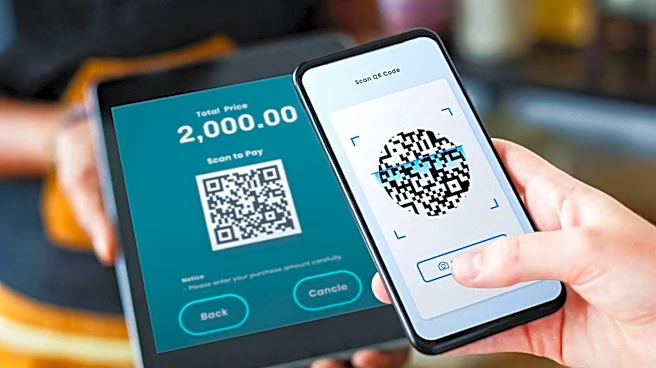
and mobile applications may function correctly, their inability to communicate with each other creates operational inefficiencies and hidden costs. For instance, an amusement park might have separate systems for ticketing, food ordering, queue management, and wayfinding. If a ride closes, its status might not update across all systems, leading guests to an unavailable attraction. Similarly, a crowded restaurant might not be alleviated by nearby available food locations if the digital menu boards are not integrated with real-time capacity information. Acquire Digital estimates that a mid-sized visitor attraction receiving one million guests annually could incur approximately £373,000 (approximately $450,000 USD) in costs due to this fragmentation, with lost food and beverage spending being the largest component. The paper argues that simply deploying more screens or self-service terminals does not guarantee efficiency if these systems operate in isolation.
Why It's Important?
The 'fragmentation tax' concept is significant for U.S. businesses, particularly in the entertainment, hospitality, and retail sectors that heavily rely on self-service technologies. The hidden costs identified, such as lost revenue from food and beverage, staff time, and diminished guest trust, directly impact profitability and customer experience. In an increasingly competitive market, operational efficiency and seamless customer journeys are crucial. Businesses that fail to integrate their various digital touchpoints risk not only financial losses but also a decline in customer satisfaction and loyalty. The white paper suggests that the focus should shift from the performance of individual devices to the overall interoperability of the self-service environment. This implies a need for businesses to re-evaluate their technology procurement strategies, prioritizing systems that offer robust APIs and interoperability to ensure data exchange and consistent information across all platforms. The potential for AI agents to interact with these systems further underscores the importance of integration, as future customer interactions may increasingly involve personal AI assistants coordinating services.
What's Next?
Operators in visitor attractions and similar industries are encouraged to conduct their own assessments to measure the real cost of fragmentation within their specific operations. This involves tracking metrics such as staff hours spent on manual updates, content inconsistencies, abandoned transactions, and lost sales opportunities. Establishing a baseline before investing in integration projects is crucial to accurately evaluate the return on investment. For kiosk manufacturers and software providers, the emphasis will increasingly be on developing systems with strong interoperability and supportability as core product capabilities, rather than optional features. The industry may also see a shift towards 'agent-ready' kiosks and digital signage that can publish machine-readable information for personal AI agents, enabling a more seamless interaction between customer AI assistants and operational systems. This evolution could lead to new purchasing criteria where the ability of a kiosk to securely serve customers interacting through their own AI agents becomes a key factor.
Beyond the Headlines
The concept of the 'fragmentation tax' extends beyond mere financial implications, touching upon broader ethical and accessibility considerations. As technology advances, ensuring that integrated systems also support accessible interfaces for all users, including those with disabilities, becomes paramount. Operational changes, such as facility closures or schedule adjustments, must be communicated effectively across visual displays, audio navigation, and other accessible interfaces. Furthermore, the rise of personal AI agents interacting with kiosks introduces new challenges related to authentication, privacy, payment authorization, and preventing fraudulent actions. Businesses will need to navigate these complexities to maintain trust and security while leveraging the benefits of advanced integration. The long-term shift could see physical kiosks evolving from direct customer interaction points to service endpoints that personal AI agents can seamlessly communicate with, fundamentally altering the customer experience and the role of physical infrastructure in digital ecosystems.