



What's Happening?
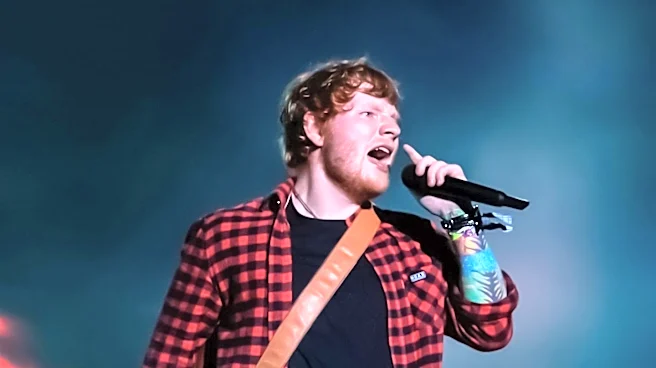
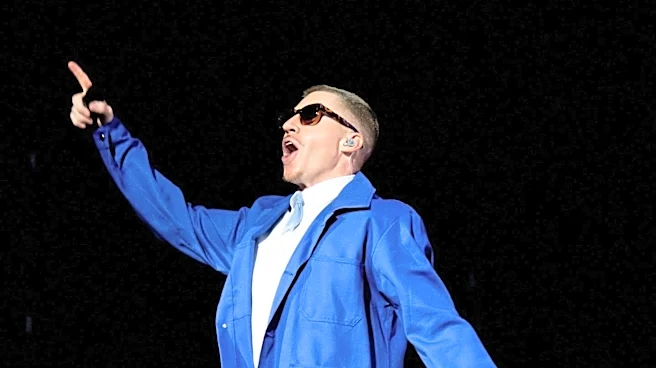
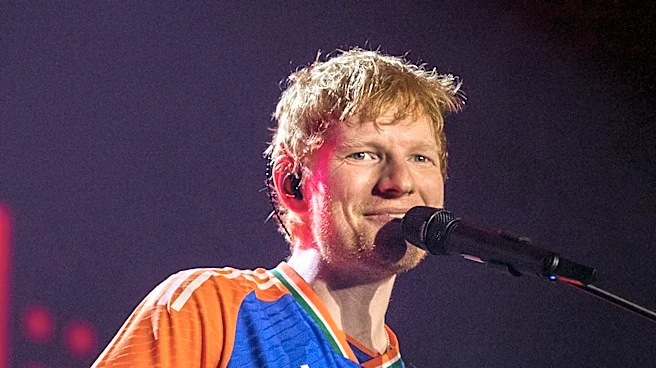
During his opening act for Ed Sheeran at MetLife Stadium in New Jersey, rapper Macklemore used his stage time to deliver political statements, including performing his song 'Hind's Hall,' which accuses Israel of 'genocide' and 'apartheid,' and leading
a 'Free Palestine' chant. He also criticized US Immigration and Customs Enforcement as a 'terror organization.' This occurred on two consecutive nights to sold-out crowds. Many Jewish attendees expressed feeling blindsided and distressed, with some leaving before Ed Sheeran's performance. Jewish influencer Jordyn Tilchen and the Israeli-American Council (IAC) have since called for refunds for affected concertgoers and for Macklemore to be removed from the tour, arguing that attendees paid for a concert, not a political rally.
Why It's Important?
This incident highlights a significant conflict between artistic expression, audience expectations, and the commercial nature of live entertainment. For many attendees, a concert is an escape, and the unexpected political messaging, particularly on a highly sensitive and divisive issue, transformed their experience from entertainment to discomfort or even distress. The demand for refunds raises questions about consumer rights when an event deviates significantly from advertised expectations. It also underscores the increasing politicization of public spaces and events, forcing artists, promoters, and venues to navigate complex ethical and commercial considerations. The controversy reflects broader societal tensions and the challenges of maintaining neutrality in public forums amidst deeply held political views.
What's Next?
The immediate future will likely see continued debate online and potentially further action from groups like the Israeli-American Council. Whether Ed Sheeran, his team, or the tour promoters will respond to the refund demands or the petition to remove Macklemore remains to be seen. Their response, or lack thereof, could set a precedent for how similar situations are handled in the entertainment industry. This event may also prompt venues and promoters to re-evaluate their policies regarding opening acts and the content they present, potentially leading to clearer guidelines or disclaimers for attendees. The incident could also influence how artists choose to use their platforms, weighing the impact of political statements on their audience and commercial viability.
Beyond the Headlines
This event delves into the complex interplay of free speech, artistic responsibility, and the commercial contract between performers and their audience. While artists generally have the right to express their views, the controversy raises questions about the ethical obligation to inform consumers when a purchased entertainment experience might include unexpected political content. It also highlights the power of social media in amplifying both the initial event and the subsequent backlash, turning a concert incident into a national conversation. The differing perspectives—some defending Macklemore's right to speak out, others demanding consumer protection—underscore the deep divisions within society and the difficulty of finding common ground, even in spaces traditionally dedicated to shared enjoyment. This incident could contribute to a broader re-evaluation of the role of political activism in mainstream entertainment.