



What's Happening?
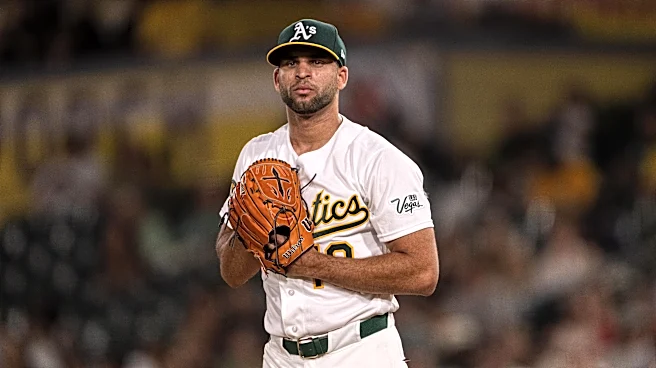
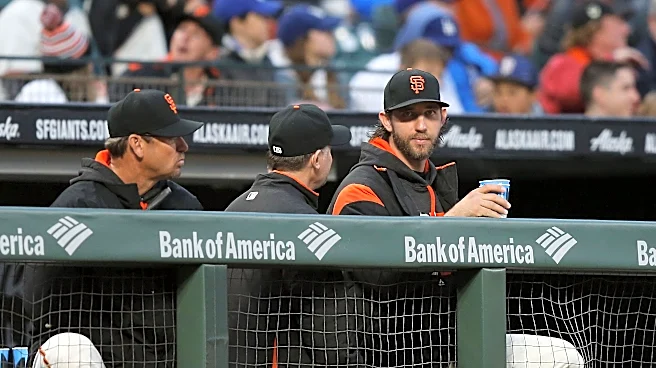
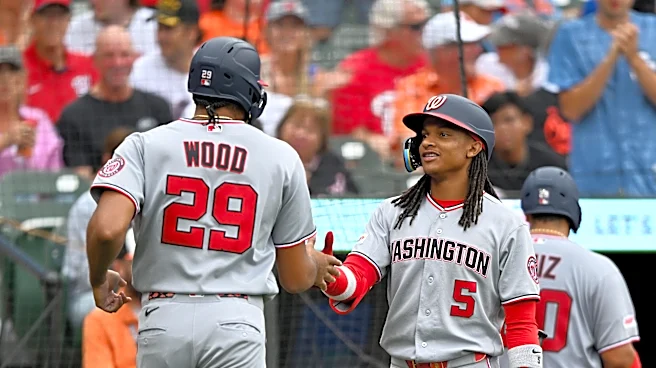
The San Francisco Giants have completed a trade, sending left-handed reliever Reiver Sanmartin to the Washington Nationals in exchange for Minor League reliever Robert Cranz. This transaction follows the Giants' earlier decision to designate Sanmartin for assignment
as part of their roster-cutting measures to reach the 40-player limit. While many players designated for assignment leave without any return, the Giants were able to acquire Cranz, a 23-year-old right-hander. Cranz was drafted in the seventh round of the 2024 draft out of Oklahoma State. He demonstrated promising performance in Low-A and High-A during his first full season in 2025, and continued to impress in 2026, starting the year in High-A with a 2.25 ERA and 27 strikeouts in 16 innings, and then in Double-A with a 3.42 ERA and 40 strikeouts in 26.1 innings. His brief stint in Triple-A at the end of 2026, however, proved challenging, with a 13.11 ERA.
Why It's Important?
This trade is significant for the San Francisco Giants as it allows them to gain a potentially valuable asset in Robert Cranz, even after designating Reiver Sanmartin for assignment. Acquiring a Minor League prospect in such a scenario is often seen as a positive outcome, as it provides the organization with new talent rather than losing a player for no return. Cranz's strong performance in the lower minor leagues, particularly his high strikeout rates, suggests he has potential to develop into a significant bullpen piece for the Giants. His fastball, which averages 95.2 mph, along with his cutter and slider, indicates a promising arsenal. For the Nationals, this move adds a left-handed reliever to their system. The success of this trade for the Giants will depend on Cranz's ability to overcome his Triple-A struggles and translate his earlier minor league success into a Major League role, potentially bolstering the team's bullpen depth in the coming seasons.
What's Next?
Robert Cranz is expected to join the Triple-A Sacramento bullpen, where he will have the opportunity to further develop his skills and adjust to the higher level of competition. His performance in Triple-A will be crucial in determining his path to the Major Leagues. The Giants will closely monitor his progress, hoping he can regain the form he showed in High-A and Double-A. If Cranz can improve his command and effectiveness at the Triple-A level, he could potentially earn a call-up to the Major League roster in the near future, providing additional depth to the Giants' bullpen. For Reiver Sanmartin, joining the Washington Nationals offers a new opportunity to establish himself in a different organization.
Beyond the Headlines
This type of minor league trade, while not always grabbing major headlines, is a common and vital part of roster management and long-term team building in Major League Baseball. It highlights the continuous effort by organizations to optimize their 40-man rosters, manage prospect pipelines, and acquire talent even from players designated for assignment. The acquisition of a prospect like Cranz, who has shown flashes of dominance but also faced challenges at higher levels, represents a calculated risk. It underscores the importance of player development systems and the scouting departments' ability to identify and nurture talent. Such moves can have long-term implications for a team's competitive window, as successful development of these prospects can provide cost-controlled talent for years to come, impacting future payroll flexibility and on-field performance.