




What's Happening?
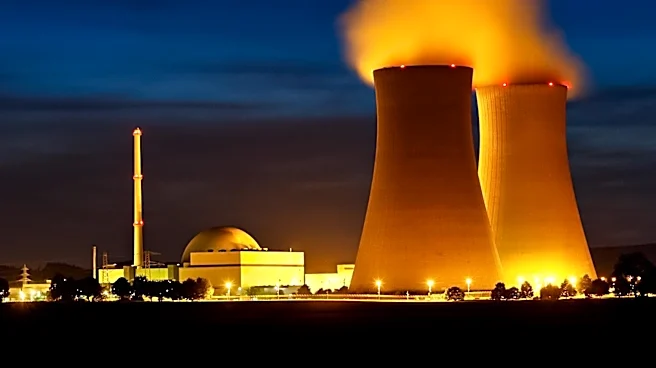
Upgrades and life extensions for existing nuclear reactors in the U.S. are generating significant investment momentum, according to Steffan Szumowski, a nuclear research analyst at VettaFi. Over a dozen existing nuclear reactors are now positioned to operate
for 80 years or more, a shift from previous considerations of early retirement due to economic uncertainty. These life extensions are leading to immediate orders for component manufacturers and service providers, extending benefits beyond just fuel suppliers to the entire nuclear supply chain. Many of these facilities are also receiving power upgrades, which increase revenue from existing assets. This trend is further supported by demand from hyperscalers, such as Google, which are contracting directly with existing nuclear facilities for reliable baseload power, exemplified by a Google-Constellation plan covering 890 megawatts across 11 reactors.
Why It's Important?
This trend is crucial for the U.S. energy sector as it leverages existing infrastructure to provide reliable, low-carbon power. Extending the operational life of current reactors offers a cost-effective way to maintain and increase nuclear energy's contribution to the grid without the lengthy timelines and high upfront costs associated with new plant construction. The increased demand from tech companies for baseload power highlights nuclear energy's critical role in supporting energy-intensive operations like data centers, which require consistent and high-capacity electricity. This not only boosts the economic viability of existing nuclear plants but also strengthens the entire nuclear supply chain, from manufacturers to engineering firms. Federal backing, including billions in conditional loans from the Department of Energy's Energy Dominance Financing Office, further reinforces this momentum, making previously shuttered or uncompleted plants economically viable for restart or completion.
What's Next?
The momentum from life extensions and upgrades is expected to continue, with federal support and easing regulatory burdens playing a significant role. The Nuclear Regulatory Commission (NRC) has reportedly streamlined review processes, shortening approval timelines from four years to one in some cases, supported by bipartisan backing for nuclear energy. This regulatory efficiency, combined with financial incentives, could lead to more life extensions and power uprates across the existing fleet. Discussions are also ongoing regarding the restart of previously shuttered plants, such as Indian Point, and the completion of uncompleted units. These developments suggest a sustained period of investment and activity in the existing nuclear infrastructure, contributing to the nation's energy security and decarbonization goals.
Beyond the Headlines
The renewed focus on the existing nuclear fleet represents a pragmatic approach to energy policy, recognizing the immediate value and potential of operational assets. This strategy not only provides a bridge to future advanced reactor technologies but also demonstrates the adaptability and resilience of the nuclear industry. The direct contracting by hyperscalers for nuclear power signifies a growing recognition of nuclear energy's unique attributes—high capacity factors and continuous operation—as essential for modern technological infrastructure. This shift could lead to new business models and partnerships between energy providers and large-scale consumers, further integrating nuclear power into the digital economy. The bipartisan support for nuclear energy, often referred to as 'purple power,' indicates a broad consensus on its strategic importance, potentially ensuring long-term stability and investment in the sector.