





What's Happening?
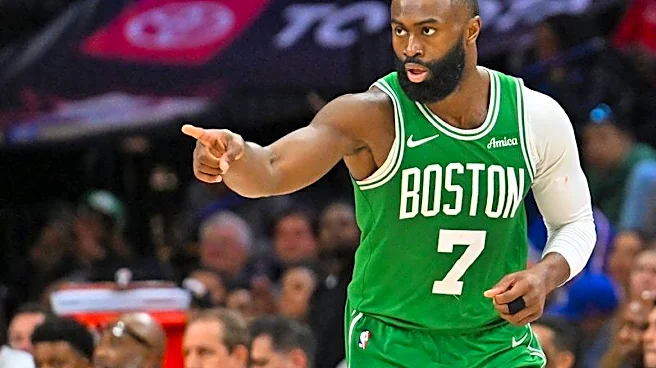
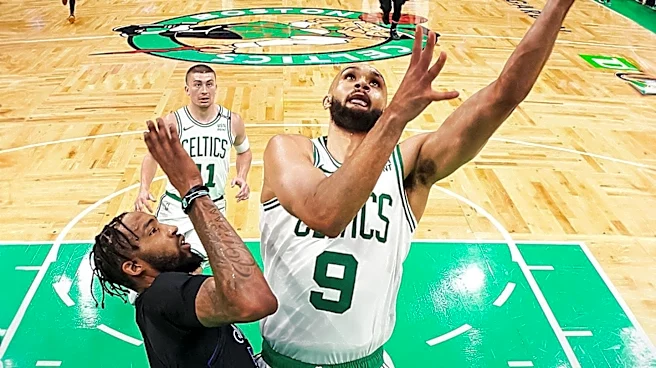
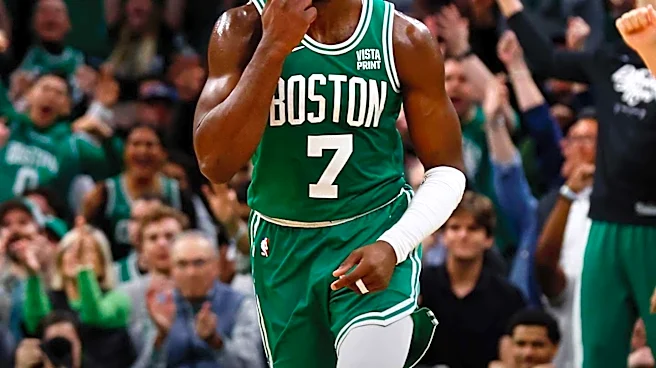
Boston Celtics President of Basketball Operations, Brad Stevens, has made a significant trade by sending star player Jaylen Brown to the Philadelphia 76ers. In return, the Celtics acquired 9-time All-Star Paul George, along with two first-round and two second-round
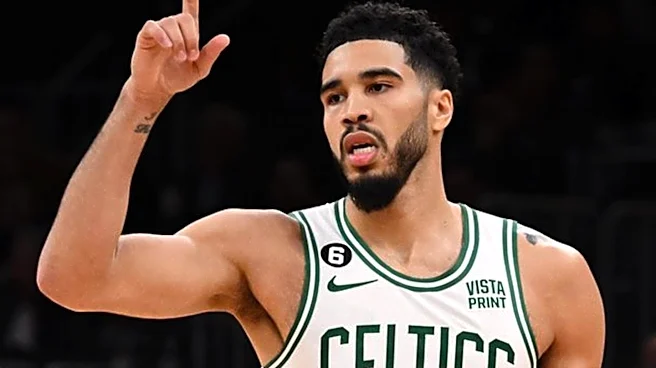
draft picks. During a press conference, Stevens explained that the decision was driven by the need for greater depth and flexibility in the team's roster. Despite Brown's contributions, including leading the Celtics to a second-place finish in the Eastern Conference during the 2025-26 season, Stevens felt that the team's future success required a more diversified approach. The trade aims to address the challenge of having a large portion of the team's salary cap tied to two players, Brown and Jayson Tatum.
Why It's Important?
This trade is pivotal for the Celtics as it reflects a strategic shift towards building a more balanced and flexible team. By acquiring Paul George, who has a shorter contract with a player option, the Celtics aim to maintain competitiveness while gaining financial and strategic flexibility. This move could potentially allow the team to attract additional talent in the future. However, the decision also carries risks, as it involves parting with a key player who has been instrumental in the team's recent successes. The outcome of this trade will significantly impact the Celtics' performance in upcoming seasons and could influence their ability to compete for championships.
What's Next?
The Celtics will now focus on integrating Paul George into their lineup and leveraging the draft picks acquired in the trade to strengthen their roster. The team's management will be closely monitoring the performance of both George and the overall team dynamics to assess the effectiveness of this strategic shift. Additionally, the Celtics will need to navigate the potential backlash from fans and stakeholders who may question the decision to trade a popular and successful player like Brown. The success of this trade will largely depend on the team's ability to capitalize on the increased depth and optionality it provides.