







What's Happening?
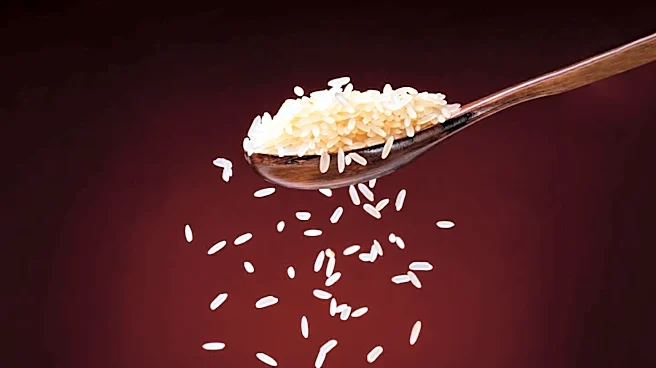
Chipotle's first restaurant in Seoul, South Korea, is sourcing a unique long-grain rice variety known as IPS for its burritos and burrito bowls. This indica rice, developed by Professor Chin Joong-hyoun of Sejong University's Department of Integrative
Biological Sciences and Industry, is specifically engineered to address agricultural challenges posed by climate change. The IPS rice is less sticky and has longer, more slender grains compared to the short-grain rice typically consumed in Korea. Its development focused on resilience to flood conditions and efficient nutrient uptake, even in phosphorus-scarce environments. Full-scale cultivation and commercialization of IPS began in 2021 with support from Haenam County and Ttangkkeut Hwangto Eco-friendly Farming, an agricultural corporation. The project has expanded distribution channels, selling IPS rice through online platforms and now to the food service industry via Chipotle.
Why It's Important?
This initiative highlights a growing trend in the food industry towards sustainable sourcing and climate-adaptive agriculture. For Chipotle, incorporating IPS rice into its menu in Seoul demonstrates a commitment to addressing environmental concerns and potentially diversifying its supply chain with resilient crops. The use of this specialized rice could set a precedent for other international food chains operating in regions vulnerable to climate change, encouraging investment in agricultural research and local farming communities. The project also underscores the potential for academic research to translate into commercial applications that benefit both consumers and the environment. By supporting the cultivation and commercialization of IPS rice, Chipotle contributes to the economic viability of local farmers in Haenam and promotes food security through the development of climate-resilient crops.
What's Next?
The success of IPS rice in Chipotle's Seoul store could lead to its broader adoption within the food service industry, both in Korea and potentially internationally. Further development of new rice varieties is already underway, with Professor Chin and his team at Sejong University working on enhancing protein content, aroma, and health benefits while maintaining adaptability. A national-level research and development initiative, with a budget of 19 billion won ($14 million), is set to run through 2029, aiming to develop more long-grain rice varieties and stable cultivation technologies. This expanded effort by universities, companies, and local growers suggests a concerted push towards strengthening Korea's food security and developing versatile rice varieties with export potential, appealing to a wider range of consumers.
Beyond the Headlines
The adoption of IPS rice by Chipotle transcends a simple menu choice; it represents a tangible step towards integrating climate resilience into global food supply chains. This move could influence consumer preferences, raising awareness about the environmental impact of food production and the importance of sustainable agricultural practices. It also highlights the critical role of academic institutions and local partnerships in fostering innovation that addresses global challenges like climate change and food security. The project's focus on developing crops that can withstand adverse environmental conditions offers a model for other regions facing similar agricultural vulnerabilities. Furthermore, the commercial success of IPS rice could stimulate policy discussions on industrializing long-grain rice production and enhancing food security at a national level, potentially leading to broader governmental support for climate-adaptive farming.