
What's Happening?
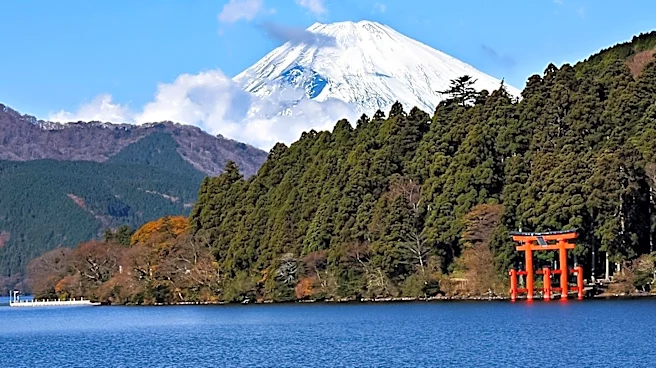
Hakone, a mountain onsen resort located in the volcanic hills of Kanagawa, Japan, is approximately ninety minutes from Tokyo. Situated in the Kanto region, it offers picturesque views of Mount Fuji across
Lake Ashi. The area is known for its volcanic vents and steaming sulfur springs, particularly in Owakudani, where black eggs boiled in these springs are believed to extend one's life by seven years. Hakone lies within the caldera of an ancient volcano, featuring a ring of wooded hills, a crater lake, and seventeen onsen villages, each with its own unique springs. It is part of the Fuji-Hakone-Izu National Park. Historically, Hakone was a challenging stage of the Tokaido road between Edo and Kyoto, with a checkpoint maintained by the Tokugawa shoguns. After 1868, foreign diplomats and Japanese aristocracy built summer villas in its cool hills, some of which are now luxurious ryokan, including the former summer villa of an imperial prince at Gora. The region also boasts numerous museums of high quality, such as an open-air sculpture park featuring works by Picasso and Henry Moore, and a museum with French Impressionists in a beech forest.
Why It's Important?
Hakone's appeal as a luxury travel destination, particularly for its onsen resorts and scenic views, highlights a growing segment of the U.S. tourism market seeking high-end, culturally immersive experiences. For U.S. travel agencies and luxury tour operators, understanding and promoting destinations like Hakone can tap into this demand, offering bespoke itineraries that cater to affluent American travelers. The region's focus on wellness, through its onsen, and cultural enrichment, via its museums and historical significance, aligns with evolving preferences among U.S. consumers for experiential travel over traditional sightseeing. Economically, increased U.S. tourism to Hakone contributes to Japan's service sector and can indirectly influence U.S. businesses involved in international travel, such as airlines and luxury goods providers. The preservation of historical ryokan and the integration of art into the natural landscape also offer insights into sustainable tourism models that could be adapted or considered by U.S. destinations aiming to enhance their own cultural and natural attractions.
What's Next?
Hakone is expected to continue attracting international tourists, including those from the U.S., due to its unique combination of natural beauty, cultural heritage, and luxury accommodations. The region may further develop its infrastructure to accommodate a growing number of visitors, potentially leading to new transportation links or enhanced hospitality services. U.S. travel companies might increase their offerings to Hakone, possibly through partnerships with local ryokan and tour operators, to provide more tailored and exclusive experiences. There could also be a trend towards promoting Hakone as part of broader multi-destination tours within Japan, combining it with visits to Tokyo and Kyoto. The emphasis on wellness tourism, particularly the onsen experience, could inspire U.S. resorts and spas to explore similar offerings or integrate elements of Japanese wellness practices into their services, catering to a health-conscious clientele.
Beyond the Headlines
Hakone's transformation from a historical checkpoint to a luxury onsen resort reflects a broader narrative of how regions adapt and thrive by leveraging their unique natural and cultural assets. The belief in the life-extending properties of Owakudani's black eggs, while a local legend, underscores the deep connection between nature, tradition, and well-being in Japanese culture. This cultural aspect can resonate with U.S. society's increasing interest in holistic health and alternative wellness practices. The integration of world-class art museums within Hakone's natural landscape also highlights a sophisticated approach to cultural tourism, where art is experienced in harmony with nature. This model could influence urban planners and cultural institutions in the U.S. to consider more integrated and immersive approaches to public art and museum development, fostering a deeper appreciation for both art and the environment. The meticulous preservation of ryokan, some dating back to imperial times, also offers a lesson in maintaining historical integrity while providing modern luxury, a challenge many historical sites in the U.S. face.