
What's Happening?
The Peaceful Sleeper provides advice for parents whose babies wake when their pacifier falls out, addressing the common issue of pacifiers becoming a sleep association. The article explains that while
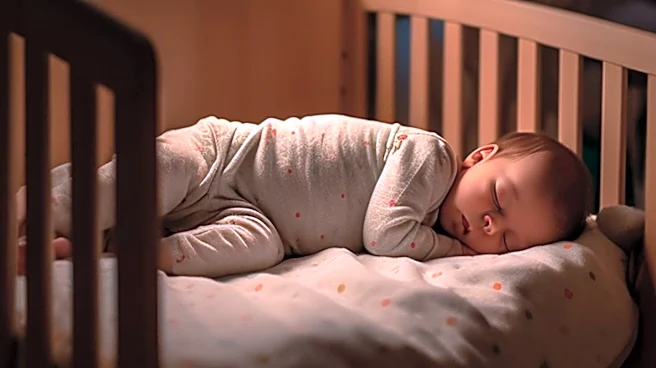
using a pacifier for sleep is not inherently problematic, it can interfere with independent sleep if the baby cannot stay asleep or return to sleep without it. A pacifier becomes a sleep association when a baby connects sucking on it with falling asleep. The source clarifies that sleep associations are normal, but the key question is whether they are sustainable for the family. Babies move through sleep cycles, and when they transition to lighter sleep stages, they may notice the absence of the pacifier and fully wake if they haven't learned to self-settle. The American Academy of Pediatrics (AAP) recommends offering a pacifier at nap time and bedtime to reduce the risk of SIDS, but notes that it doesn't need to be reinserted once the baby is asleep.
Why It's Important?
This guidance is crucial for U.S. parents and caregivers, as sleep deprivation in infants can significantly impact family well-being and parental mental health. The advice helps parents understand the difference between a beneficial sleep aid and a disruptive sleep association, empowering them to make informed decisions about their baby's sleep habits. By addressing common misconceptions and providing practical solutions, The Peaceful Sleeper contributes to better infant sleep hygiene, which is vital for healthy development. The emphasis on sustainability for the family highlights the importance of individualized approaches to parenting, recognizing that what works for one family may not work for another. This information can reduce parental stress and improve overall family dynamics by fostering more consistent and restful sleep for both infants and adults.
What's Next?
Parents can choose from several options: not changing anything if the current setup works, giving the baby an opportunity to settle without immediate pacifier replacement, or helping the baby learn to fall asleep without the pacifier. The Peaceful Sleeper suggests pausing before rushing in when a baby makes noise, as it might be a brief transition between sleep cycles. If a change is needed, the goal is to gradually separate the pacifier from the moment the baby falls asleep. The article also advises looking at the broader sleep picture, including nap schedules, bedtime timing, hunger, developmental changes, and other sleep associations, rather than solely blaming the pacifier for night wakings. The Peaceful Sleeper app offers courses, coaching, and community support for parents navigating these challenges.
Beyond the Headlines
The discussion around pacifier use and sleep associations touches upon broader themes of infant development and parental autonomy. The concept of 'sleep associations' extends beyond pacifiers to various comfort objects and routines, highlighting the psychological aspects of sleep. The ethical consideration lies in balancing the baby's comfort and developmental needs with the parents' need for rest and well-being. The AAP's recommendation regarding SIDS prevention underscores the public health implications of pacifier use, adding a layer of medical importance to parental choices. Culturally, there are varying perspectives on pacifier use, and this guidance helps to demystify the topic with evidence-based information. The emphasis on individualized solutions rather than a one-size-fits-all approach promotes responsive parenting, acknowledging the unique needs of each child and family. This holistic view of infant sleep contributes to a more informed and supportive parenting environment.