


What's Happening?
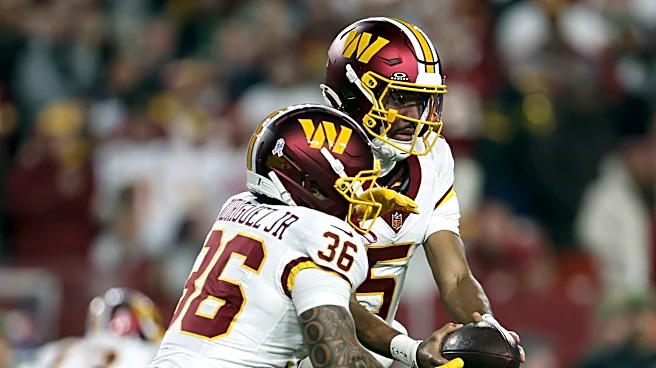
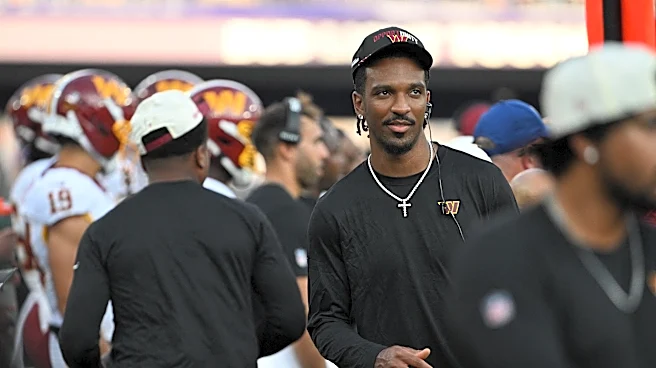
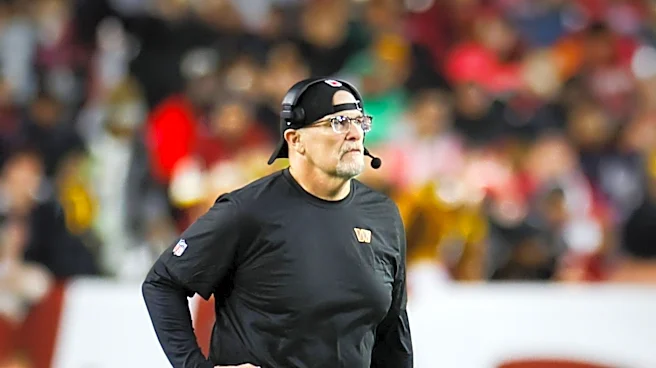
Washington Commanders Head Coach Dan Quinn has confirmed that the team's return to using a huddle in their offensive scheme is an intentional strategic shift. This change is designed to give quarterback Jayden Daniels full control over the offense, reducing
his reliance on sideline communication. For the past couple of years, the Commanders had primarily operated out of a no-huddle offense. Quinn stated that the decision to reintroduce the huddle was deliberate, aiming to enhance communication and ensure all players understand assignments and protections before approaching the line of scrimmage. This move is part of a broader effort to build the offense around Daniels' strengths and provide him with more responsibility in pre-snap operations. While the huddle is back, the team does not intend to abandon the no-huddle entirely, instead aiming to create a more versatile offensive attack that can adapt to different game situations and keep defenses guessing.
Why It's Important?
This strategic shift by the Washington Commanders signifies a significant philosophical change in their offensive approach, directly impacting quarterback Jayden Daniels' development and role. By granting Daniels more autonomy through the huddle, the team is investing in his leadership and decision-making capabilities, which could accelerate his growth as a franchise quarterback. This move also suggests a desire for a more methodical and controlled offensive pace at times, contrasting with the high-tempo, no-huddle schemes often seen in modern NFL offenses. For opponents, this means preparing for a more unpredictable Commanders offense that can alternate between huddle and no-huddle, potentially creating mismatches and exploiting defensive weaknesses. The success of this strategy will be crucial for the Commanders' overall performance and could influence how other teams approach quarterback development and offensive play-calling in the league.
What's Next?
The immediate next step for the Washington Commanders will be to fully integrate the huddle into their game-day operations and observe how Jayden Daniels adapts to this increased level of control. The coaching staff, led by offensive coordinator David Blough, will continue to refine the balance between huddle and no-huddle plays, tailoring the approach to specific game situations and opponents. Stakeholders, including fans and media, will closely monitor Daniels' performance and the overall offensive efficiency in the upcoming season to assess the effectiveness of this strategic change. The team's ability to execute both styles of play seamlessly will be a key indicator of their offensive versatility and potential success. Furthermore, the impact on other offensive players, particularly how they adjust to potentially varied tempos and communication methods, will be a point of focus as the season progresses.
Beyond the Headlines
The reintroduction of the huddle by the Commanders, while seemingly a minor tactical adjustment, reflects a deeper strategic commitment to empowering their young quarterback, Jayden Daniels. In an era where many NFL offenses prioritize speed and no-huddle schemes, this move could be seen as a counter-trend, emphasizing precision, pre-snap adjustments, and quarterback command. It highlights a coaching philosophy that values deliberate play-calling and comprehensive communication over constant tempo. This approach could foster a more disciplined offense, potentially reducing pre-snap penalties and improving execution. Ethically, it places a significant burden of responsibility on Daniels, testing his ability to manage the entire offensive operation. If successful, it could influence how other teams develop their quarterbacks, potentially leading to a re-evaluation of the optimal balance between speed and control in offensive schemes across the league.