








What's Happening?
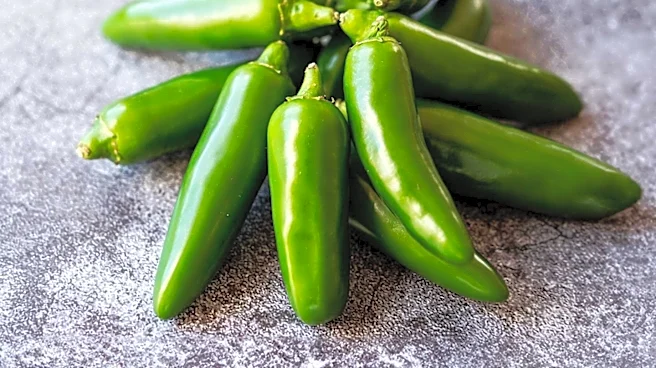
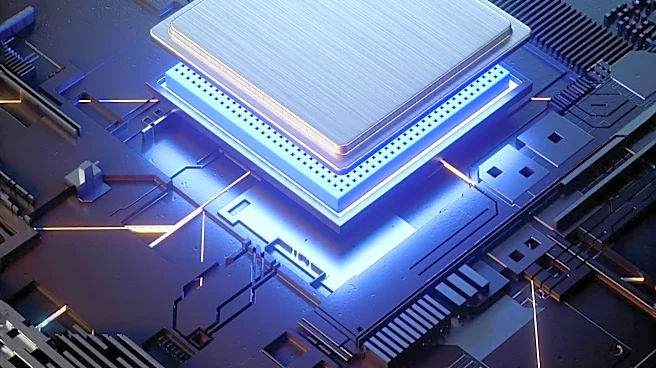
OpenAI has announced the development of its first custom AI chip, named Jalapeño, created in collaboration with Broadcom. This new chip is an Application-Specific Integrated Circuit (ASIC) designed specifically for AI inference tasks, which involve processing
data to generate responses in AI applications such as chatbots. The development of Jalapeño marks a significant step for OpenAI as it seeks to reduce its dependency on Nvidia's GPUs, which are currently in limited supply. The chip is expected to match the performance of Nvidia's Blackwell chips and Google's Tensor processing units. OpenAI describes Jalapeño as the 'first step in a multi-generation compute platform,' with plans to deploy it by the end of 2026. Early testing indicates that Jalapeño will offer significantly better performance-per-watt compared to existing alternatives.
Why It's Important?
The introduction of the Jalapeño chip is a strategic move by OpenAI to enhance its infrastructure and improve the efficiency of its AI models. By developing its own chips, OpenAI aims to gain greater control over its hardware resources, potentially reducing costs and increasing the availability of AI processing power. This development is significant in the context of the growing demand for AI capabilities across various industries, where efficient and powerful AI inference is crucial. The move also positions OpenAI alongside other tech giants like Microsoft, Meta, and Amazon, who have also ventured into custom AI chip development. The success of Jalapeño could lead to broader adoption of OpenAI's AI solutions, impacting sectors such as technology, finance, and healthcare.
What's Next?
OpenAI plans to continue testing and refining the Jalapeño chip, with full deployment expected by the end of 2026. As the chip enters the market, it may prompt competitive responses from other tech companies, potentially leading to further innovations in AI hardware. Stakeholders in industries reliant on AI technology will likely monitor the performance and adoption of Jalapeño closely. Additionally, the development may influence future collaborations between AI companies and semiconductor manufacturers, as the demand for specialized AI hardware continues to grow.