






What's Happening?
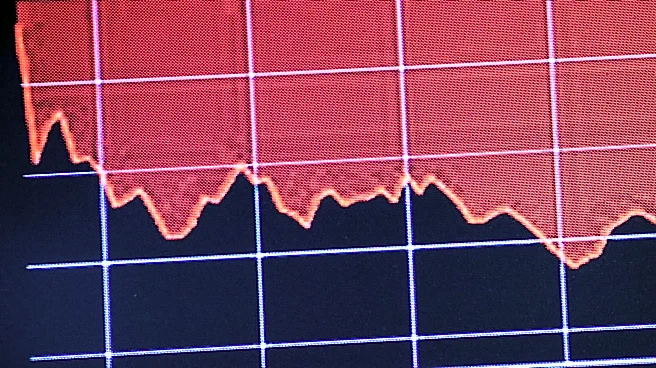
The stock market recently saw significant volatility, with the Nasdaq Composite experiencing a massive two and a half trillion dollar wipeout. This event marked one of the worst days in nearly two years for the Dow, S&P 500, and Nasdaq. The turmoil is largely
attributed to growing concerns that potential political shifts following midterm elections could lead to regulatory hurdles and moratoriums, thereby stalling the aggressive construction of AI data centers. Many investors' portfolios had become heavily concentrated in AI-related tech shares due to the sector's meteoric rise, a phenomenon financial experts refer to as 'drift.' This concentration meant that 401k plans, in many cases, inadvertently became heavily weighted in AI without conscious decisions from their owners. Chipmakers alone now account for nearly twenty percent of the S&P 500’s market value, indicating a significant reliance on a few blockbuster tech stocks across a generation of portfolios.
Why It's Important?
This market correction serves as a critical wake-up call for investors regarding the dangers of over-concentration in a single market trend, particularly in the rapidly expanding artificial intelligence sector. The substantial losses highlight the vulnerability of portfolios heavily weighted in AI, demonstrating how political and regulatory uncertainties can swiftly impact even high-growth industries. For everyday investors, this event underscores the importance of diversification, as many found their retirement plans inadvertently overexposed to tech stocks. The market's reaction to potential regulatory changes in AI data center construction suggests that the future growth of the AI industry, and consequently the broader tech market, could be significantly influenced by government policy and oversight. This shift could lead to a re-evaluation of investment strategies, moving away from speculative growth and towards more balanced and resilient portfolios.
What's Next?
Financial experts are advising investors to re-evaluate their portfolios and return to fundamental diversification strategies. While the immediate reaction to market downturns often involves panic selling, advisors caution against emotional decisions. Instead, they recommend exploring sectors that operate independently of the AI cycle. Healthcare is highlighted as a resilient option, offering stability regardless of tech trends. Current bond yields are also presented as attractive long-term income sources that can help offset equity losses. Additionally, some strategists suggest considering gold and active futures funds as ways to decouple wealth from the fluctuations of Silicon Valley. The goal is not to abandon high-growth tech entirely but to balance it with hedges like consumer staples and cash equivalents, ensuring financial plans are robust enough to withstand various economic climates.
Beyond the Headlines
The recent market volatility extends beyond immediate financial losses, revealing deeper implications for investment philosophy and risk management. The 'drift' phenomenon, where portfolios become inadvertently concentrated in a dominant sector like AI, highlights a systemic risk in passive investment strategies and benchmark-tracking funds. This event could prompt a broader re-evaluation of how retirement funds and individual investments are managed, emphasizing active portfolio management and regular audits for hidden concentrations. Ethically, it raises questions about the responsibility of financial advisors and fund managers to educate investors on diversification, especially when a single sector experiences exponential growth. Culturally, it may temper the 'fear of missing out' (FOMO) that often drives speculative investments in booming sectors, encouraging a more cautious and balanced approach to wealth building. The potential for regulatory intervention in AI data centers also signals a growing awareness of the societal and infrastructural impact of technological advancements, suggesting that future tech growth may be increasingly intertwined with public policy and environmental considerations.