
What's Happening?
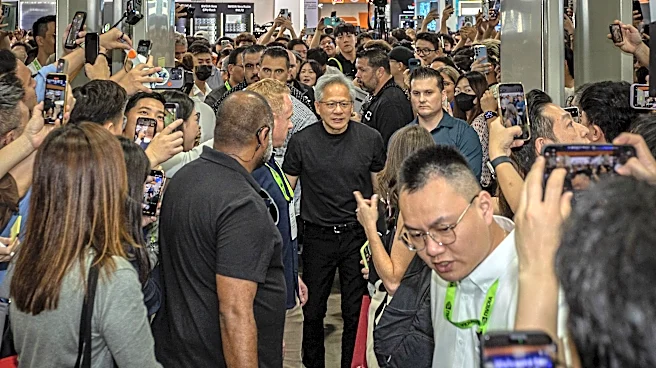
Colette Kress, Nvidia's Chief Financial Officer, briefly assumed the role of interim CEO following the resignation of Jensen Huang on November 11. Huang's resignation stemmed from scrutiny over reports
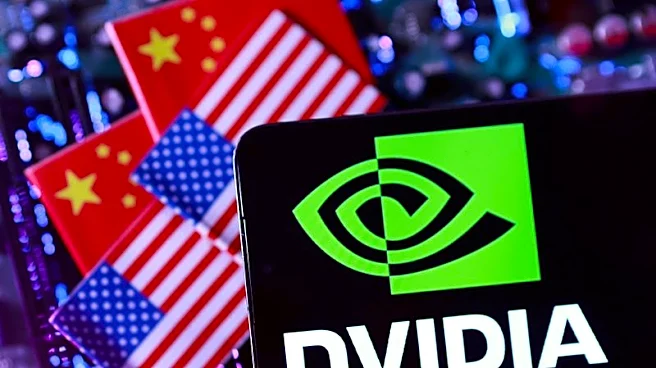
of extramarital relationships, including one with a former Megaspeed executive suspected of ties to Chinese intelligence. Megaspeed, a Singapore-based data center company, is also under investigation for allegedly delivering Nvidia's advanced GPUs to China, violating U.S. export laws. Despite the controversy, a collective of current and former Nvidia employees, along with high-profile tech executives, petitioned for Huang's return. President Trump also weighed in, seeking assurance on national security threats. On November 23, Nvidia announced Huang's immediate reinstatement as CEO, President, and a board member, which led to a significant surge in the company's stock and the broader tech sector.
Why It's Important?
The temporary leadership change at Nvidia and the subsequent reinstatement of Jensen Huang highlight the significant influence of key figures in the technology sector and the potential for market volatility in response to corporate leadership shifts. The 31.6% surge in Nvidia's shares, adding over $1 trillion to its market cap, demonstrates the immense investor confidence tied to Huang's leadership and the company's position in the AI revolution. This event also underscores the ongoing geopolitical tensions surrounding technology exports, particularly concerning advanced semiconductors to China. The allegations against Megaspeed and the looming congressional hearings for Huang and Nvidia's general counsel, Tim Teter, signal increased scrutiny on U.S. tech companies' compliance with export controls, which could impact future business strategies and international collaborations.
What's Next?
Jensen Huang is scheduled to appear before congressional committees for both closed-door and public hearings in early December. On December 1, he will testify before the House Foreign Affairs, Intelligence, and China Select committees, followed by a public hearing with the Senate Banking Committee on December 3. Nvidia's general counsel, Tim Teter, is also slated to testify before the House committees on December 2. These hearings are expected to focus on the allegations of export control violations and national security concerns related to Nvidia's technology. Additionally, a California Attorney General's probe into the alleged shipment of advanced semiconductor chips to China is ongoing. The outcomes of these investigations and hearings could lead to further tightening of export controls to China and increased regulatory oversight for the tech industry.
Beyond the Headlines
The Nvidia saga extends beyond corporate governance and market fluctuations, touching upon complex ethical and national security dimensions. The alleged involvement of a Megaspeed executive with suspected ties to Chinese intelligence raises questions about corporate espionage and the vulnerabilities within global supply chains for critical technologies. The incident also highlights the delicate balance between fostering innovation and safeguarding national interests, particularly in the context of advanced AI capabilities. The 'circular situation' where a significant portion of raw materials for GPU chips comes from China, as noted by analyst Dan Ives, underscores the intricate interdependence of the U.S. and Chinese tech ecosystems. This event could catalyze a broader re-evaluation of supply chain resilience and the ethical responsibilities of tech companies operating in a highly politicized global landscape.