



What's Happening?
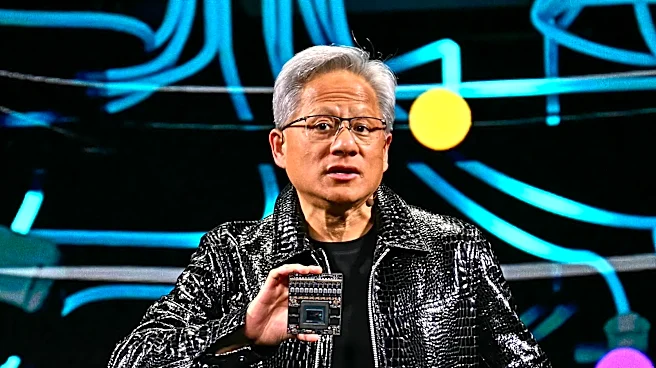
Nvidia's founder and CEO, Jensen Huang, resigned from his position on November 12, following reports of extramarital affairs, including one allegedly involving a Chinese spy. This development coincides with a U.S. government investigation into some of Nvidia's customers
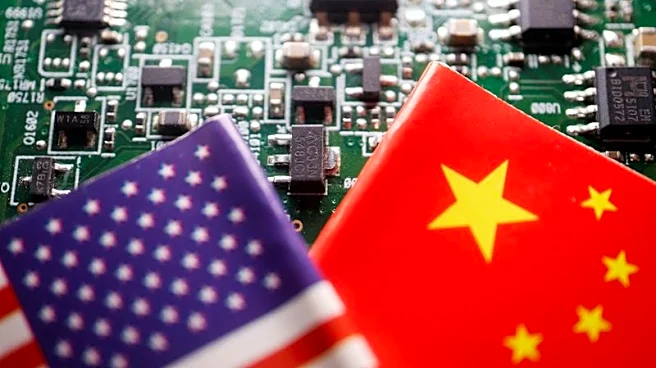
in Southeast Asia, scrutinizing whether advanced artificial intelligence (AI) chips were illegally rerouted to businesses in China. Despite this turmoil, Nvidia reported robust operating results for its fiscal 2027 third quarter, which concluded on October 25. Interim CEO Colette Kress has also issued an optimistic revenue forecast for the upcoming 2028 fiscal year. The company's stock has experienced a 37% decline from its peak amidst these events, now trading at its lowest valuation in a decade. The recent launch of Nvidia's Vera Rubin systems, which include the Rubin GPU, Vera central processing unit (CPU), and upgraded networking components, has been particularly successful, achieving nearly $20 billion in sales during the third quarter.
Why It's Important?
The resignation of a prominent CEO like Jensen Huang, especially under such circumstances, introduces significant leadership uncertainty for Nvidia, a key player in the global AI and computing hardware market. The U.S. government's investigation into potential illegal chip transfers to China highlights escalating geopolitical tensions and export control enforcement, which could impact Nvidia's international sales and supply chain. This scrutiny underscores the critical national security implications of advanced AI technology and its distribution. While the stock has plummeted, the strong performance of the Vera Rubin systems, which can significantly reduce AI inference token costs, suggests a continued high demand for Nvidia's innovative products. This cost reduction could accelerate AI adoption across various industries, making data center operations more profitable and further fueling the demand for Nvidia's chips, despite the current corporate and regulatory challenges.
What's Next?
Nvidia will likely face continued scrutiny from the U.S. government regarding its customer relationships in Southeast Asia and the potential for illegal AI chip transfers to China. The company's interim CEO, Colette Kress, will be tasked with navigating these regulatory challenges while maintaining investor confidence and operational momentum. The market will closely watch the impact of Huang's departure on Nvidia's strategic direction and innovation pipeline. The success of the Vera Rubin systems is expected to drive further AI adoption and demand for Nvidia's chips, potentially offsetting some of the negative sentiment from the leadership change and investigations. Future earnings reports and any updates on the government probe will be critical in determining the company's short-term trajectory and long-term stability in the highly competitive AI hardware market.
Beyond the Headlines
The events surrounding Nvidia extend beyond immediate financial and leadership concerns, touching upon broader themes of corporate governance, national security, and the ethics of international business. The alleged involvement of a foreign intelligence agent in the CEO's personal life raises questions about corporate espionage and the vulnerabilities of high-tech companies to external influence. The U.S. government's investigation into chip transfers to China underscores the ongoing technological rivalry between the two nations and the increasing weaponization of advanced technology. This situation could lead to stricter export controls and greater oversight of technology companies, potentially reshaping global supply chains and international collaborations in the AI sector. The incident also highlights the personal conduct of corporate leaders and its potential impact on company reputation and market stability.