



What's Happening?
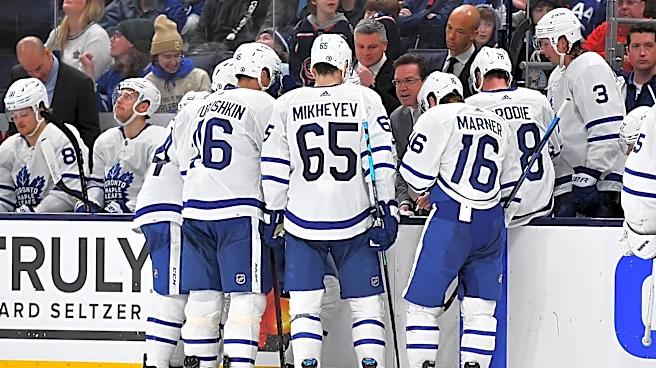
Toronto Maple Leafs head coach Jim Hiller is focusing on increasing offensive zone time as a strategy to resolve the team's defensive struggles. The Maple Leafs have been spending too much time defending in their own end, allowing 36 shots against Utah
and 40 five-on-five goals, which is tied for the second-most in the NHL. Hiller believes that better forechecking, puck possession, and keeping opponents away from the puck in the offensive zone will naturally reduce pressure on the defense. This approach was highlighted during a recent practice, where Hiller stressed the importance of this shift in strategy. Veteran forward Jack Roslovic was given a maintenance day, while John Tavares continued skating in a non-contact jersey, with his return potentially by the weekend.
Why It's Important?
The Maple Leafs' defensive vulnerabilities are a significant concern for their aspirations as a contender. Hiller's strategy to improve defense through offense is a common hockey philosophy, as sustained offensive pressure inherently limits the opponent's opportunities. If successful, this shift could not only reduce goals against but also boost team confidence and offensive flow. However, implementing this requires a collective effort from all players, particularly in forechecking and puck retrieval. Failure to execute this strategy could leave the team exposed defensively, as they continue to struggle with maintaining possession and preventing shots. The effectiveness of this approach will be crucial in determining the team's trajectory in the competitive NHL season.
What's Next?
The Maple Leafs will test Coach Hiller's new emphasis on offensive zone time in their upcoming games, starting with the Montreal Canadiens. Friday's practice will be critical for solidifying line combinations and ensuring players understand and execute the revised strategy. The potential return of John Tavares will add offensive depth, which could aid in maintaining puck possession in the offensive zone. The team's ability to translate Hiller's philosophy into tangible on-ice improvements, particularly in reducing shots against and improving 5-on-5 play, will be closely watched. The coming weeks will reveal whether this strategic adjustment can effectively address their defensive shortcomings.
Beyond the Headlines
Coach Hiller's approach highlights a fundamental debate in hockey strategy: whether to prioritize defensive positioning or aggressive offense to control the game. By emphasizing offensive zone time, Hiller is attempting to proactively mitigate defensive issues rather than reactively shoring up the back end. This strategy requires a high level of skill, coordination, and relentless effort from all five players on the ice. It also places a greater burden on forwards to be responsible in puck pursuit and possession. The success or failure of this strategic shift could influence coaching philosophies across the league, demonstrating the impact of proactive offensive pressure on overall team defense.