








What's Happening?
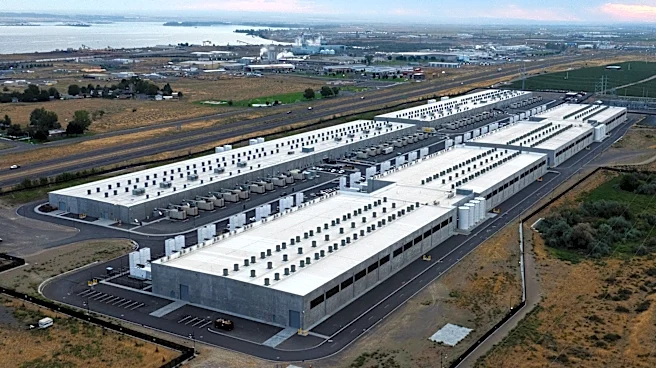
Microsoft, Amazon, and Google have reported a significant increase in their carbon emissions, driven by the construction of datacentres to support artificial intelligence infrastructure. In the financial year ending March 2026, these companies emitted
119 million metric tonnes of CO2 equivalent, nearly a third of France's emissions. This marks a 20% increase from the previous year, as the demand for cloud services and AI technologies grows. Despite these increases, the companies maintain their commitments to achieving net zero emissions by 2030 for Google and Microsoft, and by 2040 for Amazon.
Why It's Important?
The rise in emissions highlights the environmental impact of the tech industry's rapid expansion, particularly in AI and cloud services. This development raises concerns about the sustainability of tech companies' operations and their ability to meet climate goals. The increased emissions could lead to regulatory scrutiny and pressure from environmental groups. Additionally, the reliance on carbon credits to offset emissions may face challenges due to limited availability, potentially affecting the companies' sustainability strategies.
Beyond the Headlines
The expansion of datacentres underscores the growing energy demands of AI technologies, which could strain global power resources. This trend may prompt a reevaluation of energy policies and investments in renewable energy sources. The tech industry's environmental footprint could also influence public perception and consumer choices, driving demand for more sustainable practices. As AI continues to evolve, balancing technological advancement with environmental responsibility will be a critical challenge for the industry.