

What's Happening?
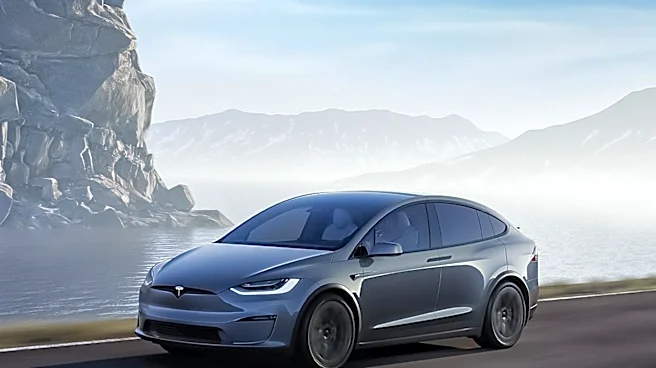
Tesla has begun rolling out its Full Self-Driving (FSD) v15 software update, which introduces a range of enhancements aimed at addressing previous weaknesses in the system. Key improvements include upgraded vision encoders, trained on millions of internet
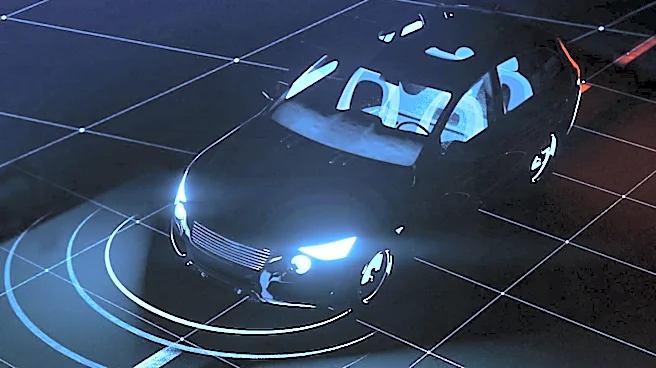
videos, which Tesla claims improve the critical intervention rate by 25 times. The update also features 'Tesla Reality View,' a new real-time generative driving visualization that provides a detailed, rendered view of the car's surroundings. FSD v15 targets better detection of road signs, small animals, road debris, potholes, and improved speed handling in various conditions, including school zones and inclement weather. Additionally, the update introduces a 'Bike Rack Mode,' allowing FSD (Supervised) and Autosteer to be engaged with a bike rack or similar hitch accessory installed, and the system can now slow down for speed cameras.
Why It's Important?
This FSD v15 update is significant for Tesla and the broader autonomous driving industry as it directly tackles some of the most persistent challenges in self-driving technology, such as accurate object detection and adherence to traffic laws. A 25x improvement in the critical intervention rate, if proven consistent across the fleet, could substantially accelerate Tesla's path toward unsupervised driving, potentially reaching 50,000 miles between critical interventions. This level of reliability could pave the way for wider adoption of FSD and impact regulatory discussions surrounding autonomous vehicles. The 'Reality View' could also enhance driver trust and understanding of the system's decisions, making the transition to more autonomous driving smoother for users. The ability to handle bike racks and react to speed cameras demonstrates a move towards more practical and compliant autonomous driving features, which could broaden the appeal and utility of FSD for a wider range of consumers.
What's Next?
Following the rollout of FSD v15, Tesla will likely continue to gather data and feedback from users to further refine the system. Future v15 releases are expected to expand navigation learning to cover entire routes, building on the current capability that only covers the start and end of trips. The company's progress with FSD v15 will be closely watched by regulators, competitors, and consumers, as it could influence the timeline for fully unsupervised autonomous driving and the development of Robotaxi services. The performance of FSD v15 in real-world scenarios, particularly concerning the claimed improvements in safety-critical cases and adherence to traffic laws, will be crucial in determining its long-term impact and acceptance.
Beyond the Headlines
The continuous evolution of FSD technology, as seen with v15, raises deeper questions about the ethical and legal frameworks surrounding autonomous vehicles. While Tesla aims for 'far exceed human levels of safety,' the responsibility in the event of an accident remains a complex issue. The introduction of features like slowing for speed cameras, while practical, also touches upon the philosophical debate of whether autonomous systems should strictly adhere to laws or adapt to human driving norms. The 'Reality View' could also shift the driver's role from active control to a more supervisory one, potentially altering the driving experience and the nature of human-machine interaction in vehicles. The ongoing development of FSD highlights the rapid technological advancements in AI and machine learning and their profound implications for transportation, urban planning, and societal norms.