








What's Happening?
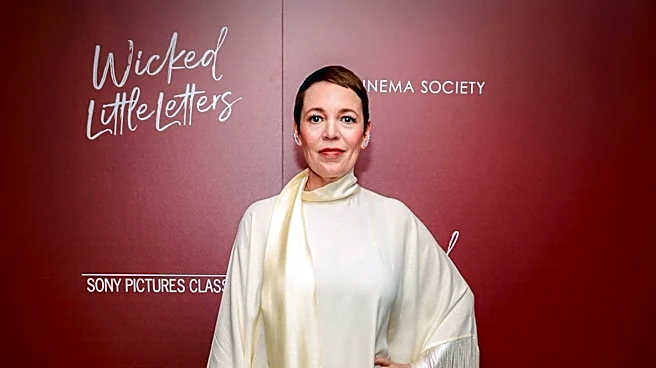
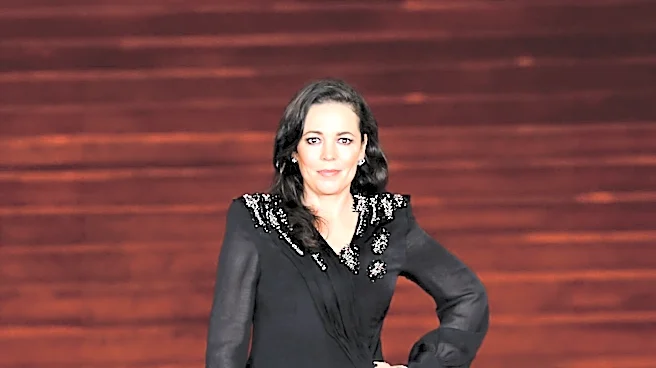
Olivia Colman takes on the lead role of the Fisherwoman in the new film 'Wicker,' a gender-swapped Pygmalion fairytale. Set in a medieval village, the story follows Colman's character, a middle-aged spinster, who commissions a Basket Weaver (Peter Dinklage)
to create a husband for her. This results in the creation of a Wicker Husband, portrayed by Alexander Skarsgård, who is described as kind and dedicated to her pleasure and happiness. The film, directed by Alex Huston Fischer and Eleanor Wilson, is inspired by Ursula Wills' short story 'The Wicker Husband' and delves into themes of love, sex, and marriage, often with a bawdy and comedic tone. The narrative also explores societal expectations and the impact of the Fisherwoman's unconventional marriage on the other villagers, particularly the jealous Tailor's Wife (Elizabeth Debicki). Colman's performance is highlighted for its vulnerability and depth, while Skarsgård's portrayal of the Wicker Husband, achieved through extensive practical prosthetics, is noted for its surprising sweetness and sincerity.
Why It's Important?
The film 'Wicker' offers a unique and provocative commentary on gender roles, societal norms, and the institution of marriage. By presenting a female protagonist who actively seeks and 'creates' her ideal partner, the movie challenges traditional patriarchal structures where women are often defined by their relationships to men. The film's exploration of themes like agency, desire, and the subversion of conventional romance resonates with contemporary discussions about equality and personal fulfillment. The comedic and bawdy approach allows for a critical yet entertaining examination of these serious topics, potentially sparking broader conversations among audiences about what constitutes a fulfilling partnership. The casting of acclaimed actors like Olivia Colman and Alexander Skarsgård in these unconventional roles further elevates the film's profile, drawing attention to its underlying social commentary and artistic merit.
What's Next?
Following its release, 'Wicker' is expected to continue generating discussion, particularly regarding its bold themes and the performances of its lead actors. The film's unique premise and its use of practical effects for the Wicker Husband are likely to be talking points among film enthusiasts and critics. The initial success of 'Wicker' 4DX screenings, which offer an immersive experience, suggests a potential for expanded theatrical runs in this format, catering to audiences seeking novel cinematic experiences. The film's critical reception and audience engagement will determine its longevity and influence in the realm of adult fairytales and social commentary in cinema. The directors, Alex Huston Fischer and Eleanor Wilson, may also find increased recognition for their distinctive storytelling approach.
Beyond the Headlines
Beyond its immediate entertainment value, 'Wicker' delves into deeper implications concerning the nature of desire, companionship, and societal acceptance. The film's portrayal of the Fisherwoman's journey from ridicule to contentment, achieved through an unconventional union, highlights the human need for connection and the courage to defy societal pressures. The jealousy and animosity from other villagers, particularly the women, underscore the internal conflicts and resentments that can arise from unfulfilled expectations within traditional marital frameworks. The film subtly critiques the 'tyranny of conformity' and 'insider parochialism,' suggesting that true happiness often lies outside prescribed norms. The 'horny' and 'fleshy bodies with desires that are embarrassing and messy' aspect of the film, as described by the directors, points to a broader cultural shift towards more open and honest portrayals of human sexuality and relationships in media.