


What's Happening?
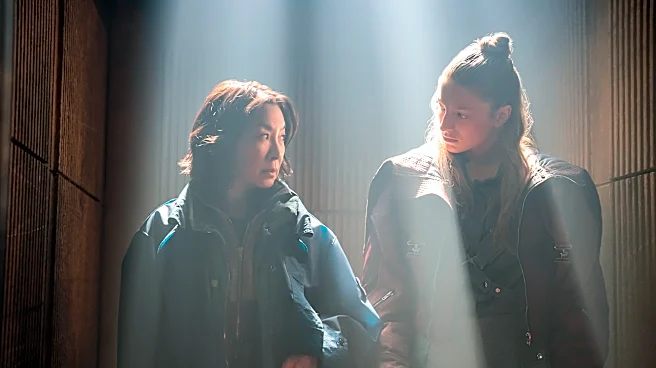
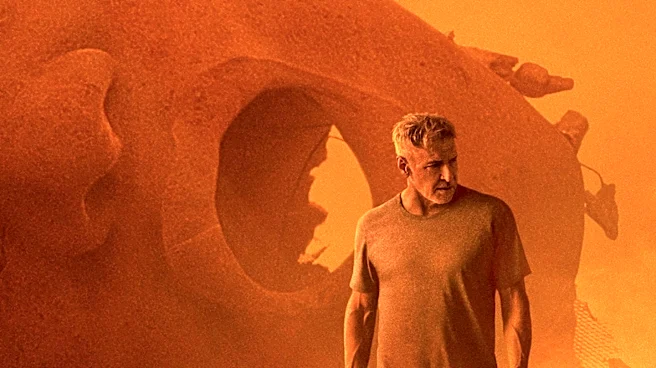
The cast of Prime Video’s 'Blade Runner 2099' has lauded the series' intricate set designs for creating a deeply immersive futuristic world. The 8-episode limited series, set 50 years after 'Blade Runner 2049,' portrays a dystopian Los Angeles where replicants
now hold power, and humans are relegated to an underclass. Michelle Yeoh stars as Olwen, a replicant cop, and Hunter Schafer plays Cora, a human posing as a replicant blade runner. Their characters are entangled in a mystery involving a rogue blade runner and a city-threatening secret. Co-stars Matthew Needham (Yahya), Lewis Gribben (Elias), and Dimitri Abold (Bebeto) shared their experiences working with creator/showrunner Silka Louisa. Gribben specifically noted that the detailed production design, particularly in Bebeto’s apartment filled with gadgets and machinery, made it easy for actors to feel fully immersed in the world, reducing the need for extensive 'acting' often required in blue-screen environments.
Why It's Important?
'Blade Runner 2099' continues a legacy of visually stunning and thematically rich science fiction. The emphasis on practical and detailed set designs, as praised by the cast, is crucial for maintaining the franchise's signature aesthetic and immersive quality. In an era where CGI often dominates visual storytelling, the commitment to tangible, well-realized sets can significantly enhance an audience's suspension of disbelief and the actors' ability to inhabit their roles authentically. This approach not only pays homage to the original films' groundbreaking production design but also sets a high bar for contemporary sci-fi productions. The series' exploration of themes like artificial consciousness, human-replicant dynamics, and societal dystopia remains highly relevant, reflecting current anxieties about AI and technological advancement. The success of its world-building is integral to effectively conveying these complex narratives and engaging viewers in its speculative future.
What's Next?
As 'Blade Runner 2099' airs its 8 episodes on Prime Video, its reception will likely influence future decisions regarding the franchise, including potential continuations or spin-offs. The critical and audience response to its visual style and narrative depth will be closely watched. The series' success could further solidify the trend of high-budget, visually ambitious science fiction on streaming platforms. For the actors involved, their performances in such a high-profile franchise could open doors to other significant roles. The show's detailed world-building may also inspire other productions to invest more heavily in practical sets and intricate production design, rather than relying solely on digital effects. Furthermore, the ongoing discussion around AI and its societal implications will continue to make the themes explored in 'Blade Runner 2099' resonate with contemporary audiences, potentially sparking further conversations about the future of technology and humanity.
Beyond the Headlines
The meticulous set design of 'Blade Runner 2099' speaks to a deeper philosophical aspect of world-building in science fiction: the creation of a believable future that feels lived-in and tangible. This approach goes beyond mere aesthetics; it grounds the speculative elements of the story in a reality that audiences can connect with, making the ethical and existential questions posed by the narrative more impactful. The series, by continuing the 'Blade Runner' tradition, contributes to a cultural dialogue about what it means to be human in an increasingly technological world. It explores the blurred lines between creator and creation, the nature of consciousness, and the societal structures that emerge from advanced technology. The praise for the sets highlights a potential shift or continued appreciation in filmmaking towards practical effects and detailed physical environments, recognizing their unique ability to foster immersion and authenticity that purely digital creations sometimes struggle to achieve. This artistic choice reinforces the idea that the environment itself can be a character, shaping the narrative and the experiences of those within it.