


What's Happening?
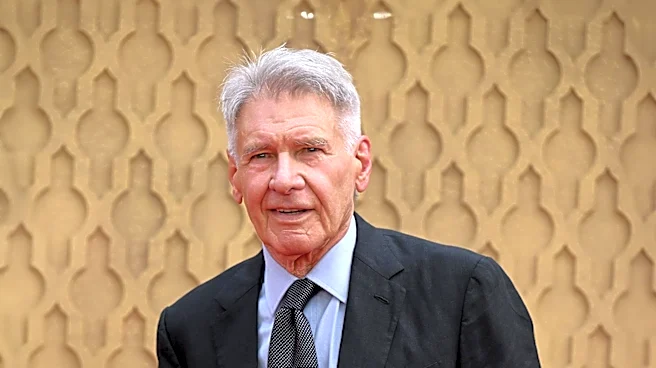
In 1992, Harrison Ford declined to star in the romantic comedy 'Runaway Bride,' a film that went on to gross over $300 million seven years later. Ford was initially attached to the project alongside Geena Davis, with Michael Hoffman slated to direct.
However, Hoffman was reportedly dissatisfied with the script and brought in Elaine May for a rewrite. When Hoffman eventually left the project, Ford also withdrew. The film later found success with Julia Roberts and Richard Gere in the lead roles, directed by Garry Marshall, who had previously worked with them on 'Pretty Woman.' According to Farout Magazine, Ford's decision was influenced by his perceived weakness as a romantic lead, a role he had struggled with in previous films like 'Hanover Street' and 'Sabrina.'
Why It's Important?
This event highlights the unpredictable nature of film production and the significant impact of casting and directorial choices on a movie's commercial success. Harrison Ford's decision to step away from 'Runaway Bride' underscores the importance of an actor's self-awareness regarding their strengths and weaknesses in specific genres. The film's eventual success with a different cast and director demonstrates that a project's potential is not solely dependent on its initial star power but can be greatly influenced by the right combination of talent and creative vision. For the film industry, this serves as a case study in how a project can evolve through various iterations and still achieve massive financial success, often due to strategic re-casting and leveraging established on-screen chemistry, as seen with Roberts and Gere.
What's Next?
While this event is historical, its implications continue to resonate within the film industry by illustrating the long-term consequences of early production decisions. For actors, it reinforces the idea that declining a role, even in a potentially successful film, can be a strategic career move if it doesn't align with their perceived strengths or artistic vision. For studios and producers, it emphasizes the value of persistence and adaptability in bringing a project to fruition, even if it means significant changes in cast and crew. The 'Runaway Bride' example remains a notable anecdote in discussions about Hollywood's casting processes and the factors contributing to a film's box office performance, influencing future decision-making in similar situations.
Beyond the Headlines
The story of Harrison Ford's non-involvement in 'Runaway Bride' delves into the deeper aspects of an actor's artistic identity and the pressures of typecasting. Ford's reluctance to embrace romantic lead roles, despite his immense star power, reveals a conscious effort to manage his public persona and career trajectory. This decision reflects a broader industry challenge where actors are often pigeonholed into specific genres or character types. The film's eventual success with Julia Roberts and Richard Gere, a proven romantic comedy duo, also highlights the commercial power of established on-screen chemistry and audience expectations. This case study offers insights into the complex interplay between an actor's personal preferences, market demands, and the creative direction of a film, ultimately shaping the cultural landscape of cinema.