


What's Happening?
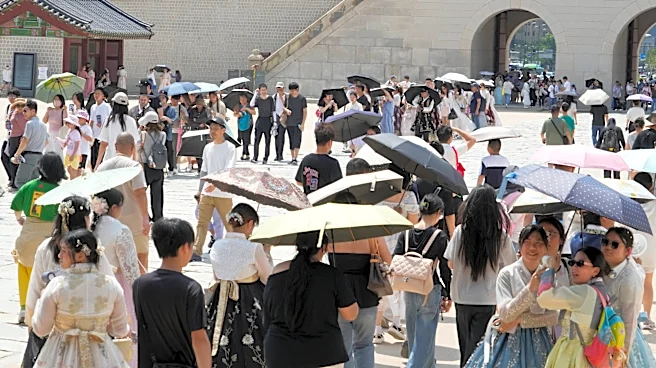
South Korea's professional baseball league, the KBO, has canceled all games scheduled for August 5 and 6 due to a severe heat wave that has resulted in record temperatures and health risks for spectators. The decision follows a directive from President
Lee Jae-myung, who has urged authorities to treat the heat wave as a national disaster and implement necessary measures to protect public safety. The heat wave has seen temperatures peak at 42.5°C, setting new all-time highs multiple times over the past week. The KBO's announcement came after several spectators collapsed from heat-related illnesses during recent games, prompting the league to prioritize the safety of players and fans. An emergency executive committee meeting is planned to discuss further safety measures.
Why It's Important?
The cancellation of KBO games highlights the significant impact of extreme weather conditions on public events and the necessity for organizations to adapt to climate-related challenges. This decision underscores the growing need for comprehensive safety protocols in response to climate change, which poses increasing risks to public health and safety. The KBO's actions may set a precedent for other sports leagues and public event organizers to prioritize safety in the face of extreme weather. The economic implications are also notable, as canceled games can affect revenue streams for teams, vendors, and local businesses reliant on game-day activities.
What's Next?
The KBO plans to hold an emergency meeting with club officials and player representatives to discuss additional safety measures. This could lead to the implementation of new protocols for future games, especially during extreme weather conditions. The league's response may influence other sports organizations to reassess their safety measures and contingency plans. Additionally, the South Korean government may consider broader policy changes to address the impacts of climate change on public health and safety, potentially leading to increased investment in infrastructure and emergency response systems.