


What's Happening?
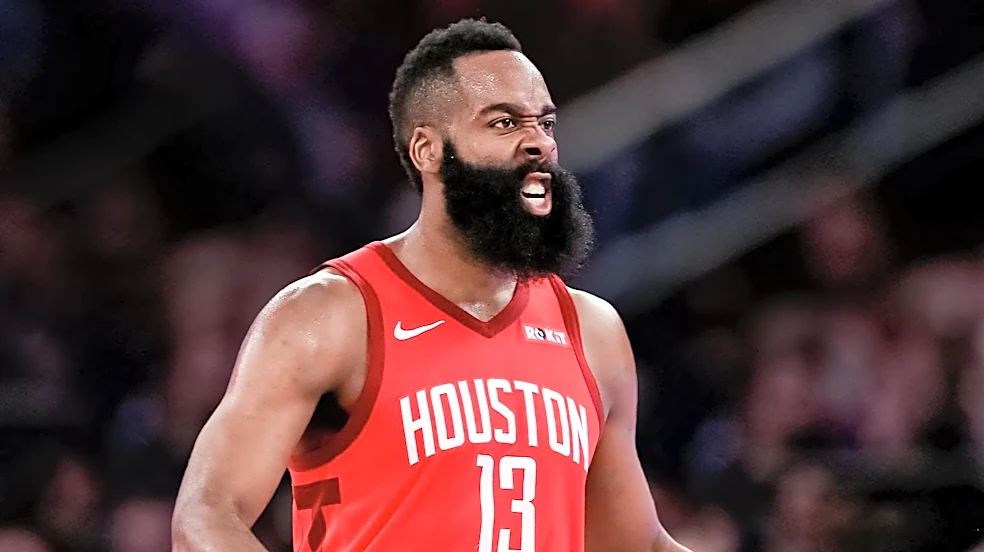
The Houston Rockets' 2017-18 season was marked by a strategically constructed roster that combined elite youth with veteran leadership, resulting in a 65-win performance and a deep playoff run. The team's dynamic, fast-paced style was spearheaded by James
Harden's scoring and Clint Capela's defensive intensity. Harden, who averaged 30.4 points, 8.8 assists, and 5.4 rebounds, led the league in scoring and was named the NBA's Most Valuable Player. His court vision and passing ability were crucial to the team's high-octane offense. Capela anchored the defense, excelling in rebounding and blocking shots, which allowed the Rockets to play an aggressive defensive scheme. The roster also featured key acquisitions like Chris Paul, who brought veteran leadership and playmaking, and role players such as Eric Gordon, who provided essential perimeter shooting. This blend of talent and a shared commitment to a high-scoring style defined a memorable season for the franchise.
Why It's Important?
The 2017-18 Houston Rockets season serves as a significant case study in successful team building within the NBA, demonstrating how a strategic blend of superstar talent, defensive anchors, and veteran leadership can lead to peak performance. The team's approach to integrating Harden's offensive brilliance with Capela's defensive prowess, complemented by the playmaking of Chris Paul and the contributions of role players, created a formidable unit. This model highlights the importance of a balanced roster construction in professional sports, where individual talent is maximized through a cohesive team philosophy. The Rockets' deep playoff run, pushing the eventual champions to seven games, underscored their status as a championship contender and provided a blueprint for future success in the league. This period also showcased the impact of a clear strategic vision in sports management, influencing how teams approach player acquisitions and tactical development.
What's Next?
While the provided source focuses on a past season, the strategic lessons learned from the 2017-18 Houston Rockets roster continue to influence current and future team-building philosophies in the NBA. The emphasis on blending superstar talent with strong defensive players and experienced leaders remains a critical consideration for franchises aiming for deep playoff runs. Teams will likely continue to analyze how the Rockets maximized their players' strengths and adapted their style of play to compete at the highest level. The success of this particular Rockets team could inspire future roster constructions, particularly in how they integrated a high-usage offensive player like Harden with a strong supporting cast. The ongoing evolution of NBA strategies will undoubtedly draw from such successful past models, as teams constantly seek to optimize their rosters for competitive advantage.
Beyond the Headlines
The 2017-18 Houston Rockets season, beyond its immediate on-court achievements, offers deeper insights into the cultural and strategic shifts within professional basketball. The team's reliance on James Harden's isolation scoring and prolific three-point shooting, combined with Clint Capela's rim protection, exemplified a growing trend in the NBA towards analytics-driven offensive and defensive schemes. This approach challenged traditional basketball philosophies and demonstrated the effectiveness of maximizing specific statistical advantages. The integration of a veteran point guard like Chris Paul also highlighted the value of experience and leadership in high-stakes environments, showcasing how seasoned players can elevate a team's performance in critical moments. This season's narrative contributes to the ongoing discussion about the optimal balance between individual star power and collective team synergy, influencing coaching strategies and player development across the league.