






What's Happening?
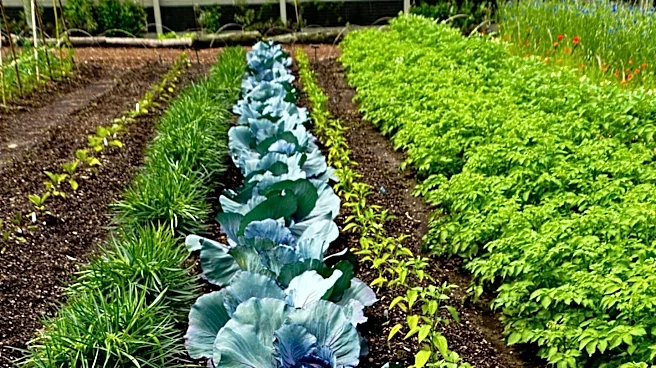
Edible gardens are increasingly featuring dark-toned vegetables like Swiss chard, Chinese Pak Choy Red Inferno, dark-leaf lettuces, Purple Moon Cauliflower, and Omero Hybrid Cabbage. These selections are chosen for their rapid growth, visually appealing
dark hues, and substantial yields. The trend emphasizes transforming vegetable gardens into spaces that are both beautiful and functional, moving beyond purely utilitarian planting. Swiss chard, for instance, is highlighted for its dual purpose as an ornamental and a food source, with its red stems contrasting against deep green leaves. Dark-leaf lettuces, ranging from burgundy to deep red and purple, contribute to an intentionally designed aesthetic. Purple Moon Cauliflower adds dramatic deep violet heads, while Omero Hybrid Cabbage offers a deep purple-red shade and substance, making it suitable for fall gardening. This approach aims to create a more engaging and theatrical garden experience.
Why It's Important?
This shift in gardening practices reflects a broader trend towards integrating aesthetics with practicality in home and community spaces. For U.S. households, it offers an opportunity to enhance outdoor living areas while simultaneously producing fresh, homegrown food. The focus on quick-growing and high-yield vegetables can contribute to food security and reduce grocery expenses for individuals and families. Furthermore, the emphasis on visually appealing plants can increase engagement in gardening, potentially leading to more people adopting sustainable practices. This trend also highlights the versatility of common vegetables, encouraging experimentation with different varieties and colors. The integration of beauty and utility in edible gardens can foster a greater appreciation for nature and the food production process, impacting lifestyle choices and potentially influencing local food movements.
What's Next?
The continued popularization of aesthetically pleasing edible gardens could lead to increased demand for seeds and plants of dark-toned and visually striking vegetable varieties. Seed companies and nurseries may expand their offerings to cater to this growing interest. Educational initiatives and gardening workshops might focus on techniques for designing and maintaining such gardens, further spreading awareness and adoption. We could also see a rise in garden design services specializing in edible landscaping. As more individuals embrace this approach, there may be a greater emphasis on community gardens and urban farming initiatives that prioritize both food production and visual appeal, transforming public and private green spaces. This trend could also influence culinary practices, with a renewed interest in dishes that showcase the vibrant colors of these unique vegetables.
Beyond the Headlines
Beyond the immediate benefits of fresh produce and garden aesthetics, this trend touches upon deeper cultural and psychological aspects. The act of cultivating a beautiful and productive garden can be a source of mental well-being and stress reduction. It encourages a connection with nature and a more mindful approach to food consumption. Ethically, growing one's own food, even partially, can reduce reliance on industrial agriculture and its associated environmental impacts. The emphasis on 'theatrical' gardening suggests a desire for personal expression and creativity in everyday life. This movement could also subtly challenge conventional notions of what a garden 'should' look like, promoting diversity in plant choices and design. It represents a fusion of art and sustenance, reflecting a growing desire for holistic and enriching experiences in daily living.