







What's Happening?
Crude oil prices dropped below $100 a barrel on Friday, marking a third consecutive session of decline. This downturn follows earlier volatility, as market concerns over supply disruptions from Saudi Arabia have eased. Initial fears stemmed from the closure
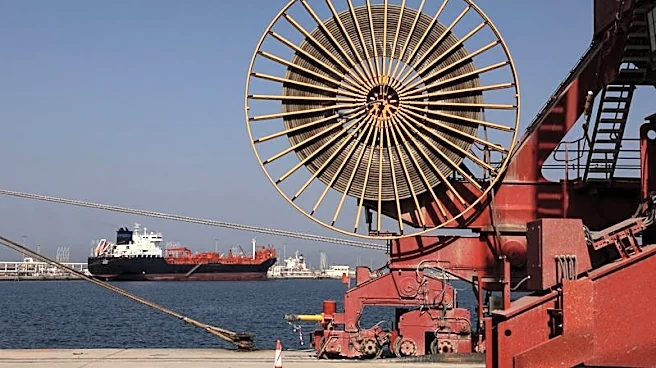
of a key Saudi pipeline. However, satellite imagery indicates that Saudi Arabia has significantly increased oil movement through the Strait of Hormuz, with 2.8 million barrels per day (bpd) over the past six days, compared to 700,000 bpd in August. Additionally, Saudi Aramco reportedly expects to restore half of the pipeline’s daily flows, and Saudi Arabia has sold 60 million barrels of crude from the Persian Gulf port of Ras Tanura for September and October loadings via ship-to-ship transfers outside the strait. These developments have collectively alleviated immediate supply anxieties.
Why It's Important?
The decline in crude oil prices below $100 a barrel is a significant development for the U.S. economy and global markets. Lower oil prices can translate to reduced costs for consumers at the gas pump, potentially boosting consumer spending and easing inflationary pressures. For U.S. industries, particularly those reliant on transportation and manufacturing, decreased energy costs can improve profit margins and operational efficiency. Conversely, U.S. oil producers might see a reduction in revenue, potentially impacting investment in new drilling projects and overall domestic production levels. The easing of supply fears from a major producer like Saudi Arabia also contributes to global market stability, reducing the likelihood of sudden price spikes that could destabilize economic forecasts and business planning. This situation highlights the delicate balance between supply, demand, and geopolitical factors in determining energy prices.
What's Next?
Markets will closely monitor Saudi Arabia's progress in fully restoring its pipeline operations and maintaining consistent oil flows through the Strait of Hormuz. Any further disruptions or unexpected changes in production or export strategies could quickly reverse the current downward trend in prices. Traders will also be watching global demand indicators, particularly from major consumers like China and South Korea, to gauge future price movements. The U.S. Energy Information Administration (EIA) and other energy agencies will likely update their forecasts based on these developments. Consumers can expect continued fluctuations at the pump, influenced by both international supply dynamics and domestic refining capacity. Long-term, the incident may prompt a re-evaluation of energy supply chain resilience and diversification strategies among major importing nations.
Beyond the Headlines
The swift market reaction to Saudi Arabia's supply adjustments underscores the inherent fragility of global energy markets and their susceptibility to geopolitical events. The reliance on a few key chokepoints, such as the Strait of Hormuz, creates vulnerabilities that can be exploited or disrupted, leading to widespread economic ripple effects. This event also highlights the strategic importance of alternative export routes and the flexibility of major oil producers to adapt to unforeseen circumstances. Furthermore, it subtly emphasizes the ongoing debate about energy independence versus global interdependence, and the continuous challenge for nations to secure stable and affordable energy supplies in an unpredictable world. The ability of Saudi Arabia to quickly reroute significant volumes of crude also showcases the logistical complexities and capabilities within the global oil industry.