







What's Happening?
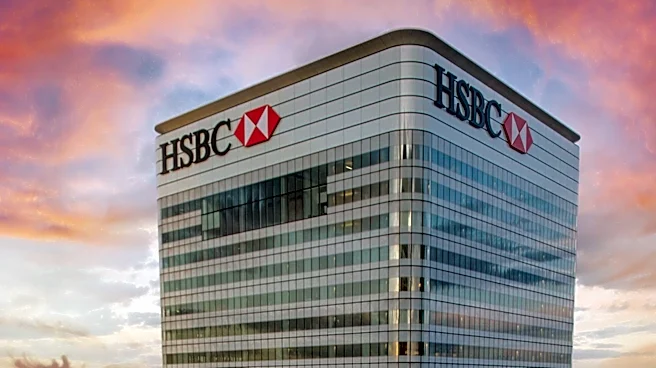
HSBC is expanding its artificial intelligence (AI) capabilities by establishing a new applied research institute in Hong Kong, focusing on AI and other emerging technologies within the banking industry. The bank plans to launch this institute in the first
quarter of 2027. Chief Executive Georges Elhedery announced this development at Hong Kong Fintech Week, marking a significant investment by the city's largest lender. To support its technical research, HSBC will collaborate with the Hong Kong University of Science and Technology. This academic partnership is slated to eventually relocate to permanent premises within the Northern Metropolis development, situated near the border with mainland China, once the mega-project site is ready. This initiative positions Hong Kong as a key hub for HSBC's technological innovation, contrasting with some international competitors who are reducing staff due to technological disruption.
Why It's Important?
HSBC's decision to establish a major AI research institute in Hong Kong underscores the city's growing importance as a fintech hub and a strategic location for technological innovation in Asia. This investment signals HSBC's commitment to leveraging AI and emerging technologies to enhance its banking operations, potentially leading to more efficient services, improved customer experiences, and new financial products. The collaboration with the Hong Kong University of Science and Technology will foster a strong link between academia and industry, promoting talent development and cutting-edge research in AI. The eventual relocation to the Northern Metropolis further integrates Hong Kong's technological ambitions with broader regional development plans, strengthening cross-border ties with mainland China. This move could also attract other financial institutions and tech companies to invest in Hong Kong, boosting its innovation ecosystem and creating new job opportunities in the technology sector.
What's Next?
The HSBC AI institute is set to launch in Q1 2027, with initial operations likely to focus on establishing research priorities and recruiting talent. The collaboration with the Hong Kong University of Science and Technology will begin to yield research outcomes, potentially leading to pilot programs and the integration of new AI solutions into HSBC's banking services. As the Northern Metropolis development progresses, the institute's relocation will further solidify its long-term presence and strategic importance. This initiative could also spur further investment in AI infrastructure and talent development across Hong Kong's financial sector. Other banks and financial institutions may follow suit, increasing their own AI research and development efforts to remain competitive. The success of this institute could serve as a model for how traditional financial institutions can embrace and drive technological transformation.
Beyond the Headlines
HSBC's significant investment in AI research in Hong Kong reflects a broader strategic pivot by global financial institutions towards technology-driven innovation as a core competitive advantage. This move highlights the increasing role of AI in reshaping the financial services industry, from automating back-office operations to personalizing customer interactions and detecting fraud. The choice of Hong Kong as the location also emphasizes the city's enduring appeal as a gateway to Asia and its potential to become a leading hub for fintech innovation, despite geopolitical shifts. The long-term implications include a potential transformation of banking services, making them more data-driven and efficient, but also raising questions about data privacy, algorithmic bias, and the future of human employment in the financial sector. The integration with the Northern Metropolis project suggests a vision of technological development intertwined with urban planning and regional economic integration, creating a synergistic environment for innovation.