






What's Happening?
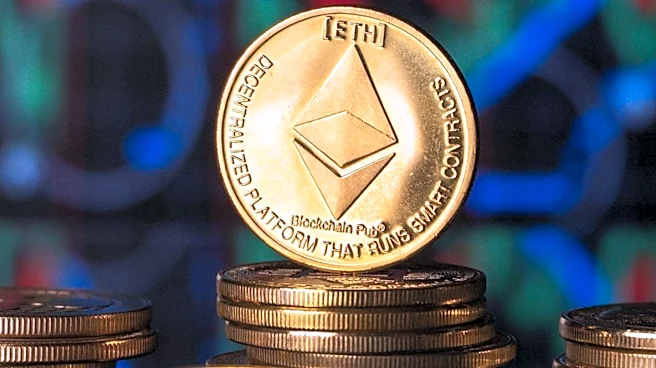
Individuals can now purchase Ethereum (ETH) online using credit or debit cards, offering a streamlined process for acquiring the cryptocurrency. The transaction involves two primary systems: the payment rails for fiat currency and the Ethereum network
for ETH. Payment providers handle the card or bank payments and identity verification, while the Ethereum network settles the transfer of ETH. The specific payment provider and country determine the available payment methods and associated costs. Users are advised to ensure their Ethereum wallet supports the specific network on which the ETH is delivered, as ETH can exist on various networks, including Ethereum mainnet and layer-2 solutions. Transaction fees, known as 'gas,' are paid in ETH to the network, and these costs can fluctuate based on network activity.
Why It's Important?
The increased accessibility of purchasing Ethereum with credit and debit cards significantly lowers the barrier to entry for new investors and users in the U.S. This ease of access can drive broader adoption of ETH, potentially increasing its market liquidity and overall demand. For individuals, it simplifies the process of engaging with decentralized finance (DeFi) applications and other Ethereum-based services, as self-custody of ETH is often a prerequisite for such interactions. However, it also introduces considerations regarding identity verification, payment security, and understanding network specifics like gas fees and supported networks, which are crucial for a secure and successful transaction. The ability to buy ETH directly with traditional payment methods bridges the gap between conventional finance and the burgeoning crypto economy.
What's Next?
As purchasing Ethereum with credit and debit cards becomes more common, the market is likely to see further integration of cryptocurrency transactions into mainstream financial systems. This trend could lead to more competitive pricing among payment providers and potentially lower transaction fees. Users will need to remain vigilant about understanding the nuances of different Ethereum networks and wallet compatibility to avoid issues with fund recovery. Regulatory bodies may also increase their scrutiny of these payment methods to ensure compliance with anti-money laundering (AML) and know-your-customer (KYC) regulations, which could impact the verification processes. The continued evolution of payment infrastructure for cryptocurrencies will likely focus on enhancing security, user experience, and regulatory adherence.
Beyond the Headlines
The seamless integration of credit and debit card payments for cryptocurrency purchases represents a significant step towards the normalization of digital assets as a form of currency and investment. This development challenges traditional banking systems and payment processors to adapt to the demands of the digital economy. It also highlights the ongoing tension between the decentralized nature of cryptocurrencies and the centralized requirements of financial regulations, particularly concerning identity verification and transaction monitoring. The convenience of card payments could accelerate the shift away from traditional financial intermediaries, empowering individuals with greater control over their assets. However, it also underscores the importance of financial literacy and digital security for users navigating this evolving landscape, as the irreversibility of blockchain transactions places a higher onus on individual responsibility.