




What's Happening?
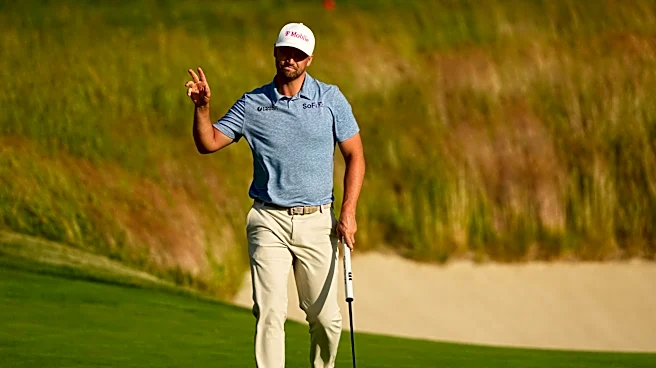
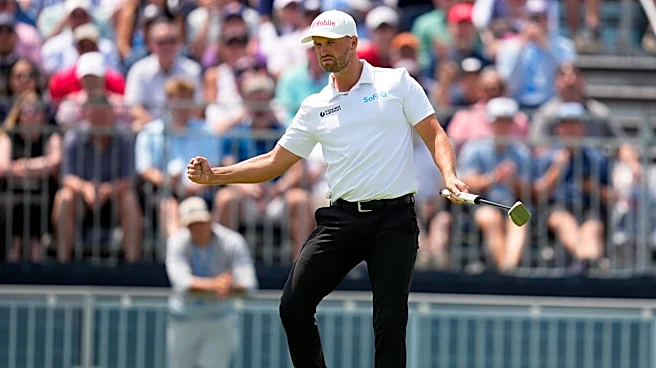
Wyndham Clark secured his second US Open title in four years at Shinnecock Hills, overcoming a challenging environment where he was not the crowd favorite. Despite leading by six shots after the third round, Clark faced a muted reception from spectators,
with many leaving before the final moments of his victory. The lack of support was attributed to various factors, including the tournament's scheduling and Clark's past controversies. Throughout the final round, Clark was often treated as a villain, with fans cheering his missteps and remaining silent during his successes. Despite the hostile atmosphere, Clark managed to maintain his composure and secure the win, demonstrating significant personal and professional growth since his previous controversies.
Why It's Important?
Clark's victory highlights the complex relationship between athletes and their audiences, particularly in high-stakes environments like the US Open. His ability to succeed despite a lack of public support underscores the importance of mental resilience and personal development in professional sports. This event also reflects broader themes in sports culture, where public perception can significantly impact an athlete's experience and legacy. For Clark, overcoming these challenges may redefine his career trajectory and influence how he is perceived in the golfing community. The situation also raises questions about the role of fan engagement in sports and how it affects athletes' performances and mental health.
What's Next?
Following his victory, Clark may focus on further improving his public image and continuing to refine his game. His recent success could lead to increased opportunities, such as sponsorships and invitations to other prestigious tournaments. The golfing community and media may also shift their focus to Clark's potential as a leading figure in the sport, especially if he continues to perform at a high level. Additionally, the USGA and other tournament organizers might consider the impact of scheduling and location on fan engagement and athlete experience, potentially leading to changes in future events.
Beyond the Headlines
Clark's journey reflects broader societal themes of redemption and resilience. His ability to rebuild his career and confidence after past controversies offers a narrative of personal growth that resonates beyond sports. This story also highlights the evolving nature of sports fandom, where athletes must navigate complex relationships with their audiences. As Clark continues to compete, his experiences may contribute to ongoing discussions about mental health and the pressures faced by professional athletes. His story could inspire others facing similar challenges, emphasizing the importance of perseverance and self-belief.