






What's Happening?
The Seafood Economic Accelerator for Maine (SeaMaine), an Augusta, Maine-based industry-led initiative, has awarded a total of $1 million in grant funding to five community infrastructure projects across the state. These grants, identified through SeaMaine's
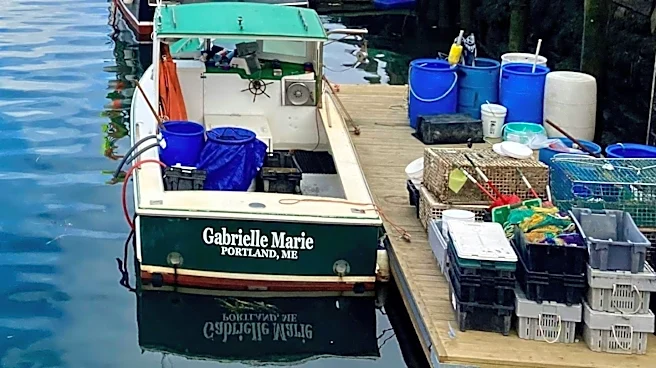
Seafood Infrastructure Adaptation Fund (SIAF), are designated for improvement projects in marine facilities in Tremont, Rockland, Freeport, Swan's Island, and Boothbay Harbor. The largest grant, $300,000, will support the rebuilding of Rockland's commercial fish pier, a two-phase project focusing on climate resilience assessments, adaptation planning, and infrastructure reinforcement. Other projects include restoring Freeport's wharf, modernizing bait-salting and ice-making equipment in Boothbay Harbor, retrofitting a town-owned building into a cold storage facility in Tremont, and renovating a vacant space on Swan's Island for harbormaster offices and solar-powered cold storage. U.S. Representative Chellie Pingree emphasized the importance of these investments for Maine's working waterfronts, which are crucial to the state's economy and culture.
Why It's Important?
These grants are vital for strengthening Maine's seafood industry and coastal communities, which are significant contributors to the state's economy. The funding addresses critical issues such as aging infrastructure and the increasing severity of storms, which have put immense pressure on fishermen, lobstermen, aquaculture operators, and related businesses. By investing in infrastructure repair and climate resilience, the grants aim to ensure the long-term viability of working waterfronts, protect jobs, and maintain the supply of Maine's iconic seafood products. The projects will enhance operational efficiency, improve safety, and support the livelihoods of thousands of individuals involved in the marine sector. Furthermore, these investments contribute to the broader economic stability of coastal towns, preventing potential disruptions to local economies and preserving the cultural heritage associated with Maine's maritime traditions.
What's Next?
The awarded funds will be utilized for the specified infrastructure projects in Tremont, Rockland, Freeport, Swan's Island, and Boothbay Harbor. These projects will involve various stages, including climate resilience assessments, adaptation planning, and physical construction or renovation. The SIAF program, developed in 2024 and supported by NOAA's Climate Resilience Regional Challenge (CRRC) award, will continue to play a role in addressing infrastructure needs. The ongoing efforts to repair storm damage and modernize facilities are expected to enhance the resilience of Maine's working waterfronts against future environmental challenges. Local communities and businesses will likely see improvements in their operational capabilities and economic stability as these projects are completed, contributing to a stronger and more vibrant future for Maine's seafood resources.
Beyond the Headlines
The investment in coastal infrastructure highlights a growing recognition of the economic and social vulnerabilities faced by communities on the front lines of climate change. Beyond the immediate economic benefits, these projects represent a proactive approach to adapting to environmental shifts, such as rising sea levels and more frequent severe storms. The focus on climate resilience in infrastructure planning sets a precedent for other coastal regions facing similar challenges. Moreover, the collaborative effort between an industry-led initiative like SeaMaine and federal funding mechanisms like NOAA's CRRC underscores the importance of multi-sector partnerships in addressing complex environmental and economic issues. This integrated approach can serve as a model for sustainable development and climate adaptation strategies in other U.S. states with significant coastal economies.