






What's Happening?
Abu Dhabi's sovereign wealth funds, including ADIA, Mubadala, and ADQ, are significantly expanding their global investment portfolios, with total assets projected to reach $2.7 trillion by 2026. These funds are actively acquiring stakes across various
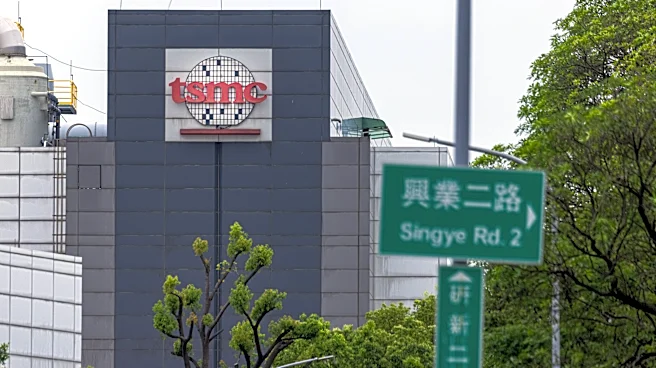
sectors and geographies. Notably, Mubadala holds significant investments in cutting-edge U.S. chip companies like GlobalFoundries and Arm Holdings, as well as AI companies such as Anthropic, OpenAI, and Crusoe. Additionally, Mubadala has majority stakes in U.S. asset manager Fortress Investment Group. ADIA primarily focuses on quiet minority stakes in public stocks across North America, Europe, and Asia. This strategic diversification aims to secure Abu Dhabi's economic future beyond oil and enhance its diplomatic influence globally. The UAE's investment strategy has also seen substantial projects in Africa, totaling $110 billion between 2019 and 2023, making it the largest backer of new business projects on the continent, surpassing China.
Why It's Important?
The extensive investments by Abu Dhabi's sovereign wealth funds have significant implications for the U.S. economy and its technological landscape. Their substantial stakes in key U.S. chip manufacturers and leading AI companies provide crucial capital and support for innovation and growth in these strategic sectors. This influx of foreign investment can bolster U.S. technological leadership, create jobs, and foster economic development. However, it also raises questions about foreign influence in critical U.S. industries and potential national security considerations, particularly in sensitive areas like AI and semiconductor manufacturing. The diversification of these funds away from oil-dependent economies highlights a global trend towards strategic investments in future-oriented technologies, positioning the U.S. as a prime destination for such capital due to its robust innovation ecosystem and market stability. The scale of these investments underscores the growing interconnectedness of global financial markets and the increasing role of sovereign wealth funds in shaping international economic dynamics.
What's Next?
The continued expansion of Abu Dhabi's sovereign wealth funds into U.S. markets is expected to persist, driven by their long-term strategy to diversify assets and secure a post-oil economic future. Future investments are likely to target emerging technologies, renewable energy, and other high-growth sectors within the U.S. This trend could lead to increased scrutiny from U.S. regulatory bodies regarding foreign ownership in critical infrastructure and technology companies, potentially prompting policy discussions on national security and economic sovereignty. As these funds deepen their involvement, there may be further collaborations or partnerships with U.S. companies, fostering technological advancements and market expansion. The ongoing performance of these U.S. investments will also influence the funds' future allocation strategies, potentially attracting more capital to successful sectors or prompting reallocation from underperforming ones. The broader geopolitical landscape and bilateral relations between the U.S. and the UAE will also play a role in shaping the trajectory of these investments.
Beyond the Headlines
The strategic investments by Abu Dhabi's sovereign wealth funds extend beyond mere financial transactions; they represent a sophisticated geopolitical play to enhance the UAE's global standing and influence. By investing in cutting-edge U.S. technology and AI, Abu Dhabi is not only seeking financial returns but also aiming to gain access to advanced technological expertise and foster strategic alliances. This approach can lead to a deeper integration of the UAE into the global innovation ecosystem, potentially accelerating its own technological development. However, it also raises ethical considerations regarding the control and influence of foreign entities over critical U.S. intellectual property and technological infrastructure. The long-term implications could include shifts in global power dynamics, with economic leverage translating into increased diplomatic clout. The balance between welcoming foreign investment for economic growth and safeguarding national interests will remain a key challenge for U.S. policymakers.