




What's Happening?
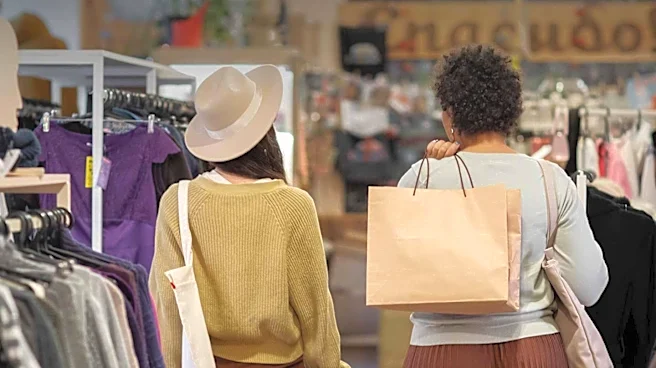
Kappahl Group is significantly expanding its secondhand clothing initiative, making it available in all Kappahl and Newbie stores across Sweden, Norway, and Finland. This autumn, the program will roll out to over 300 stores, allowing customers to both
donate and purchase secondhand children's clothing. The company began developing its secondhand offering in 2022 and has gradually tested and expanded the concept. Viktoria Arndt, responsible for circular business models at Kappahl Group, stated that the goal is to make it easier and more inspiring for customers to give clothes a longer life. This move is part of Kappahl Group's long-term commitment to developing circular business models and extending the lifespan of clothing, further solidified by its majority stake acquisition in the secondhand chain Arkivet in summer 2026.
Why It's Important?
This expansion by Kappahl Group is important for the U.S. fashion industry and consumers as it demonstrates a growing trend among major retailers to integrate circular economy principles into their business models. While this specific expansion is in Europe, it sets a precedent that could influence U.S. brands to adopt similar strategies. For U.S. consumers, such initiatives offer more accessible and convenient options for sustainable fashion, potentially reducing textile waste and promoting a more conscious approach to clothing consumption. It also highlights the increasing market demand for sustainable practices, which can drive innovation and competition among retailers to offer environmentally friendly alternatives. The success of such programs can encourage U.S. companies to invest in similar ventures, contributing to a more sustainable global fashion ecosystem.
What's Next?
Following Kappahl Group's expansion, it is likely that other international and potentially U.S.-based fashion retailers will observe the success and challenges of this model. This could lead to increased investment in circular business models, including in-store secondhand programs, clothing rental services, and repair initiatives. The focus will be on making these options convenient and appealing to a broad customer base. There may also be a push for greater standardization and transparency in how secondhand items are processed and priced. Furthermore, the integration of technology could play a role in streamlining the collection, sorting, and resale of used garments, making the process more efficient and scalable across larger markets, including the U.S.
Beyond the Headlines
Kappahl Group's move signifies a broader shift in corporate responsibility within the fashion industry, moving beyond traditional linear models of production and consumption. By actively facilitating the reuse of clothing, the company is not only addressing environmental concerns but also engaging customers in a more participatory and sustainable fashion cycle. This approach challenges the fast fashion paradigm by encouraging consumers to view clothing as a resource with extended value rather than a disposable commodity. The initiative also highlights the potential for collaboration between established retailers and specialized secondhand platforms, as seen with Kappahl's investment in Arkivet, to accelerate the transition towards a more circular economy. This could inspire similar partnerships and acquisitions in the U.S. market, fostering a more robust and integrated secondhand ecosystem.