









What's Happening?
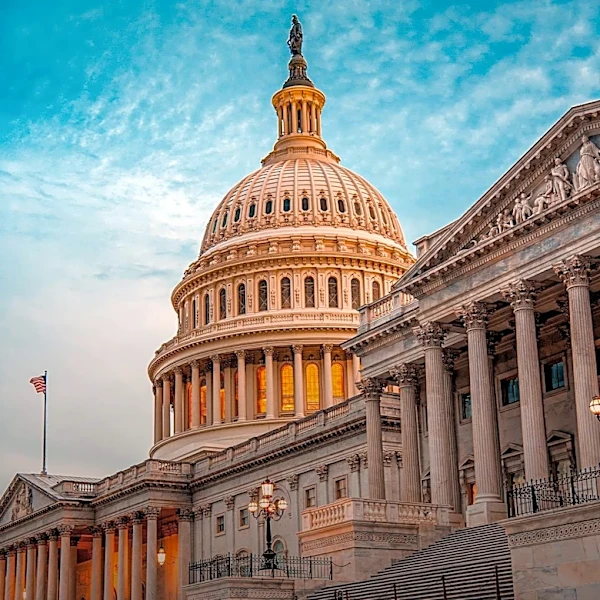
U.S. Representative Robert Aderholt (R-Haleyville) recently participated in the 'Alabama Allies Economic Exchange' on Capitol Hill. This event brought together Alabama's congressional delegation, economic development organizations, and corporate partners
to promote the state as a prime location for business investment. The initiative, dubbed 'Team Alabama,' aims to showcase the state's favorable business environment and the collaborative support available from its congressional representatives, regardless of party affiliation. During the event, Representative Aderholt, alongside Representative Mike Rogers (R-Saks), met with out-of-state prospects, reinforcing the unified message that Alabama is ready to work with companies looking to expand. Other members of the delegation, including Representatives Barry Moore (R-Enterprise), Dale Strong (R-Huntsville), Terri Sewell (D-Birmingham), and Shomari Figures (D-Mobile), also presented on a panel titled 'Advocates for Alabama’s Growth.' The event highlighted Alabama's investments in education, infrastructure, and economic development, with leaders from the Economic Development Partnership of Alabama, the Alabama Finance Director, and the executive director of AIDT presenting to industry leaders.
Why It's Important?
This collaborative effort by 'Team Alabama' is significant for the state's economic future. By presenting a united front, Alabama's congressional delegation and economic development leaders aim to attract new businesses and investments, which can lead to job creation and economic growth within the state. The focus on showcasing Alabama's diverse industries, from advanced manufacturing and aerospace to life sciences and technology, demonstrates a strategic approach to broadening its economic base. The success of such recruitment efforts can directly impact the livelihoods of Alabamians by providing new employment opportunities and strengthening local economies. Furthermore, the bipartisan nature of this initiative underscores a shared commitment among Alabama's political leaders to prioritize economic development, potentially fostering a more stable and attractive environment for businesses considering relocation or expansion. The emphasis on a supportive ecosystem, where companies don't have to navigate the state alone, is a key selling point designed to reduce perceived risks for potential investors.
What's Next?
The 'Team Alabama' initiative is an ongoing effort, and the recent event on Capitol Hill is part of a continuous strategy to attract businesses to the state. The congressional delegation and economic development leaders plan to continue making their pitch to prospective industries, emphasizing Alabama's readiness to support new investments. Future efforts will likely involve continued engagement with out-of-state companies, follow-up meetings, and showcasing specific success stories, such as Hadrian's significant investment in Northwest Alabama. The state will likely continue to highlight its investments in education and infrastructure to demonstrate a commitment to long-term growth and a skilled workforce. The collaborative approach among Alabama's political and economic leaders is expected to persist, aiming to create a consistent and appealing message for businesses considering the state. The focus will remain on turning opportunities into tangible investments and further solidifying Alabama's reputation as a business-friendly state.
Beyond the Headlines
The 'Team Alabama' initiative reflects a broader trend of states actively competing for corporate investments through coordinated efforts between political and economic stakeholders. This approach goes beyond traditional lobbying by creating a unified narrative and offering comprehensive support to potential investors. The bipartisan cooperation demonstrated by Alabama's congressional delegation is particularly noteworthy, suggesting that economic development can serve as a common ground for political leaders despite ideological differences. This model could influence other states to adopt similar collaborative strategies to enhance their economic competitiveness. Furthermore, the emphasis on specific sectors like advanced manufacturing and aerospace, as exemplified by Hadrian's investment in submarine components, highlights the strategic importance of aligning state economic goals with national priorities, such as strengthening the defense industrial base. This integrated approach not only aims to attract businesses but also to foster long-term economic resilience and innovation within the state.