




What's Happening?
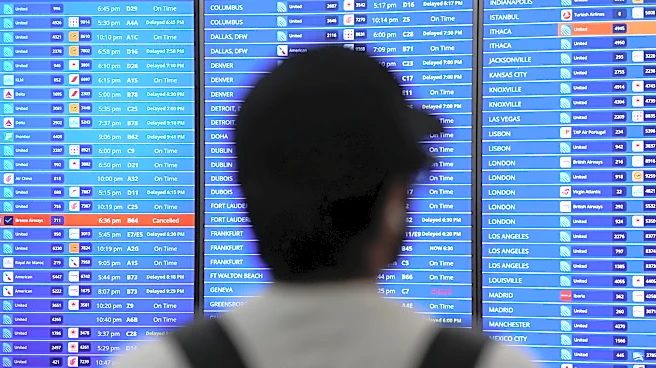
The Federal Aviation Administration (FAA) issued a nationwide ground stop at 3:54 p.m. ET, significantly impacting the travel plans of numerous college football teams for their Week 11 games. The FAA order, only the second nationwide ground stop since
September 11, 2001, was attributed to a "communication issue impacting all Air Route Traffic Control Centers." As a result, teams like Tennessee, Texas, Ole Miss, Washington, Utah, Minnesota, Purdue, Tulane, San Jose State, North Texas, and Wyoming were grounded. Some teams, such as Tennessee, had not yet departed, while others, like Texas, were already boarded on their planes. North Texas, scheduled to play UTSA, had its flight grounded and is now traveling by bus to San Antonio. The ground stop caused widespread delays and cancellations, with FlightAware reporting nearly 7,000 affected flights. Officials had not provided a clear timeline for when the ground stop would end, though the order was initially set to run until 11:30 p.m. ET.
Why It's Important?
This FAA ground stop carries significant implications for the integrity and scheduling of college football's Week 11, a crucial period for teams vying for playoff spots and conference championships. The disruption in travel logistics could lead to delayed arrivals, reduced preparation time, and potential fatigue for players, potentially affecting game outcomes. For teams like Tennessee, a 7-2 contender, and No. 2 Utah, the inability to travel as planned adds an unforeseen challenge to their high-stakes matchups. The incident also highlights the vulnerability of large-scale events to infrastructure failures, even those unrelated to the event itself. The reliance on air travel for collegiate sports teams means that a national air traffic control issue can directly impact athletic competitions, potentially leading to competitive disadvantages or even game postponements, as was considered for Ole Miss. The broader economic impact includes the costs associated with alternative travel arrangements and potential revenue losses if games are affected.
What's Next?
The immediate next steps involve monitoring the FAA's resolution of the communication issue and the lifting of the ground stop. Teams that were grounded will need to finalize their alternative travel plans, such as busing, to ensure they reach their destinations before kickoff. The NCAA and individual conferences will likely assess the impact on game schedules, with potential considerations for adjusting kickoff times or, in extreme cases, postponing games, as was discussed for the Ole Miss vs. Oklahoma game. The incident may also prompt a review of contingency plans for college athletic programs in the event of widespread travel disruptions. Furthermore, the FAA will conduct an investigation into the cause of the telecommunications outage to prevent future occurrences, which could lead to updated protocols for air traffic control systems.
Beyond the Headlines
This incident underscores the intricate dependencies within modern infrastructure and how a single point of failure, such as a telecommunications issue within the FAA, can ripple across diverse sectors, including sports. Beyond the immediate logistical challenges for college football teams, the event raises questions about national preparedness for widespread travel disruptions and the resilience of critical systems. The comparison to the post-9/11 flight groundings highlights the rarity and severity of such an event, prompting a broader societal reflection on air travel reliability and security. For the affected student-athletes, the unexpected travel changes could impact their mental and physical states, adding an unquantifiable variable to their performance. The event also serves as a reminder of the unseen complexities involved in coordinating large-scale events and the potential for external factors to significantly alter planned outcomes.