




What's Happening?
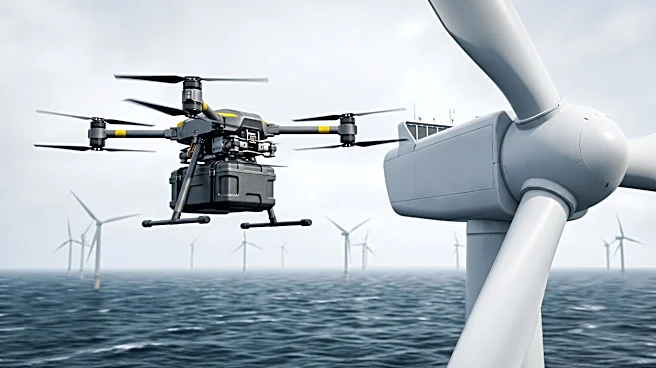
Ørsted, in collaboration with Skyports Drone Services, has completed a four-week trial of heavy cargo drones for turbine maintenance at its Hornsea 2 offshore wind farm in the North Sea. The trial assessed the drones' capability to deliver maintenance kits
weighing up to 65 kilograms (143 pounds) between a service vessel and turbine tops. This initiative aims to reduce routine vessel trips, improve turbine uptime, and lower operational risks and costs. The project involved specialists in safety, aviation, warehousing, and site operations, operating within the UK Civil Aviation Authority regulatory framework. A new automatic hook load-collection method was developed to enhance safety and automation. This trial also marked a significant milestone with the first Beyond Visual Line of Sight (BVLOS) delivery inside the wind farm, covering approximately 4 kilometers (2.5 miles). The flights were planned, coordinated, and monitored from a specialist service vessel, with airspace approvals supported by the Civil Aviation Authority.
Why It's Important?
This drone trial represents a significant advancement in the operational efficiency and safety of offshore wind farms, which are crucial for renewable energy expansion in the U.S. and globally. By enabling faster and safer delivery of parts and tools, drones can minimize turbine downtime, ensuring more consistent electricity generation. This innovation directly addresses the logistical challenges and high costs associated with traditional maintenance methods involving vessels and helicopters in the demanding offshore environment. Reduced vessel movements can lead to lower fuel consumption, decreased emissions, and substantial operating cost savings, making offshore wind energy more economically viable. Furthermore, by limiting technicians' exposure to lifting operations and challenging sea conditions, the trial enhances worker safety. The successful implementation of drone technology could accelerate the development and maintenance of large-scale offshore wind projects, contributing to the U.S.'s clean energy goals and reducing reliance on fossil fuels.
What's Next?
Following the successful trial, Ørsted plans to integrate drone-enabled maintenance into its routine operations, indicating a shift towards more automated and efficient maintenance protocols for its offshore wind farms. Continued industry collaboration and evidence gathering will be vital to further integrate routine BVLOS operations into the airspace system, unlocking the full potential of this technology. This could lead to broader adoption of cargo drones across the offshore wind sector, potentially influencing regulatory frameworks for drone operations in challenging environments. Other wind farm operators are likely to observe Ørsted's success and consider similar implementations, fostering innovation in maintenance strategies. The development of more advanced drone capabilities, such as increased payload capacity and extended flight ranges, could further revolutionize offshore logistics and maintenance, impacting the long-term cost and efficiency of renewable energy production.
Beyond the Headlines
The successful deployment of heavy cargo drones for offshore wind turbine maintenance highlights a broader trend of technological innovation driving the renewable energy sector. This development underscores the increasing convergence of advanced robotics and sustainable energy solutions, pushing the boundaries of what is possible in challenging industrial environments. Ethically, it raises questions about job displacement for traditional maintenance crews versus the creation of new roles in drone operation and data analysis. Legally, the expansion of BVLOS operations will necessitate evolving regulatory frameworks to ensure safety and airspace management, potentially setting precedents for other commercial drone applications. Culturally, it signifies a growing acceptance and reliance on autonomous systems for critical infrastructure maintenance, reflecting a societal shift towards smart, data-driven solutions. This technological leap could also inspire similar innovations in other remote or hazardous industries, fostering a new era of operational efficiency and safety.