



What's Happening?
The Hotel Lucile, a new 25-room boutique hotel, is set to open on September 14 in Silver Lake, Los Angeles, occupying a building that was originally constructed as Bethany Presbyterian Church in 1931. The transformation of this historic structure follows
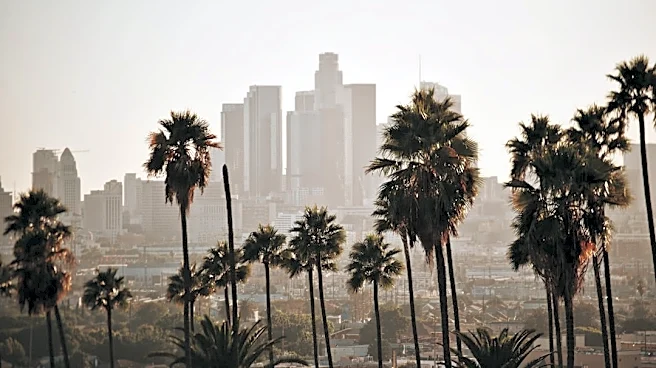
over a decade of controversy, including community debate, bankruptcy, and the eventual takeover by Santa Barbara-based Casetta Group in 2020. The hotel retains many original architectural elements, such as interior arches, masonry, woodwork details, and stained glass windows, alongside a rooftop cross that will remain illuminated at night. The former sanctuary now houses a restaurant and bar, Sous Sous, which will serve dinner and draw inspiration from southern French and American Southern cooking traditions. The organ loft has been converted into a meeting space, and the choir loft now serves as a coffee and drinks zone. The property also features a small pool, a rotating display of over 100 contemporary artworks, and a rooftop lounge with views of downtown Los Angeles. The hotel's rooms, mostly with single king beds, are located in the space that once served as a church school.
Why It's Important?
The opening of Hotel Lucile signifies a notable trend in urban development and adaptive reuse, particularly in areas with aging infrastructure and evolving community needs. The conversion of a historic church into a boutique hotel reflects a creative solution to preserving architectural heritage while addressing the demand for unique hospitality experiences. This project contributes to the revitalization of Silver Lake's Sunset Junction area, adding to its vibrant mix of stylish establishments. However, it also highlights the challenges and community tensions that can arise during such transformations, particularly concerning issues like traffic and neighborhood character. The Casetta Group's specialization in adapting older structures demonstrates a growing market for properties with historical significance, offering a distinct alternative to newly constructed hotels. This trend can have a positive economic impact by attracting tourism and investment, but it also raises questions about balancing preservation with commercial development and managing community concerns.
What's Next?
Upon its opening, Hotel Lucile will face the immediate task of integrating into the Silver Lake community and establishing its reputation as a unique hospitality destination. The hotel's management will need to effectively address potential challenges such as parking, given the lack of on-site facilities, and manage neighborhood relations. The success of Sous Sous restaurant and the overall guest experience will be crucial for its long-term viability. The project's outcome could serve as a model for future adaptive reuse projects in Los Angeles and beyond, particularly as more religious buildings become available due to declining attendance. The recent California law SB4, which facilitates the conversion of faith-based buildings into affordable housing, suggests a broader policy interest in repurposing such structures, indicating that Hotel Lucile's transformation is part of a larger societal and urban planning discussion about the future of historic religious properties.
Beyond the Headlines
The conversion of a church into a hotel like Hotel Lucile touches upon deeper cultural and societal shifts. It symbolizes the changing role of religious institutions in modern society and the evolving use of urban spaces. As traditional religious attendance declines, many church buildings, often architectural landmarks, face an uncertain future. Adaptive reuse projects like this offer a way to preserve these structures and give them new life, preventing demolition and maintaining a sense of historical continuity within a neighborhood. However, it also raises questions about the sacred versus the secular, and how communities perceive the transformation of spaces once dedicated to worship into commercial ventures. The project highlights the tension between historical preservation, economic development, and community identity, prompting reflection on how cities can creatively repurpose their heritage while respecting diverse values and needs.