





What's Happening?
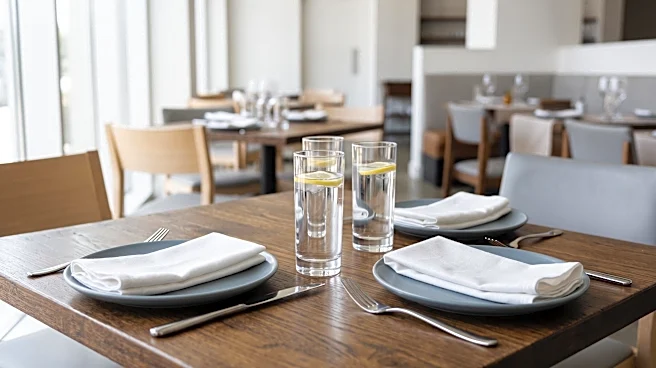
Bestselling author and podcast host Mel Robbins, drawing from her past experience as a waitress at the Red Rooster Tavern in Michigan, shared an unconventional strategy for earning higher tips. Robbins recounted advice from a mentor-boss who suggested
focusing attention on the women at a table, rather than assuming the man paying the bill is the sole determinant of the tip amount. According to Robbins, women often influence the gratuity by commenting on the server's performance to their partners. She stated that she learned to 'ignore the men and to completely take fabulous care of the women.' While hospitality experts acknowledge the influence women can have, they caution against showing favoritism, emphasizing that skilled servers should attend to the entire table. Robert Mahon, managing partner of Mahon Hospitality Group, noted that while women often have final judgment on service, ignoring any diner is 'bad hospitality.'
Why It's Important?
This revelation highlights the subtle social dynamics that can influence tipping culture in the U.S. restaurant industry. For servers, understanding these dynamics could potentially impact their earnings, which are often heavily reliant on tips. The advice challenges the traditional assumption that the person paying the bill is the only one to impress, suggesting a more nuanced approach to customer service. While potentially beneficial for individual servers, the strategy also raises questions about equitable service and potential biases. Hospitality experts emphasize that a holistic approach to service, ensuring all diners feel well-cared for, is crucial for consistent success and positive customer experiences, rather than singling out specific individuals based on perceived influence. This discussion contributes to the broader conversation about fair tipping practices and the psychological factors at play in customer gratuity.
What's Next?
The discussion initiated by Mel Robbins's anecdote is likely to continue sparking conversations among restaurant staff, management, and customers regarding tipping strategies and service etiquette. While individual servers might experiment with such approaches, industry standards and training programs are expected to continue advocating for comprehensive and unbiased service for all patrons. Restaurant owners and managers may need to reinforce training on equitable service to prevent potential issues arising from perceived favoritism. The broader public discourse on tipping could also be influenced, with customers potentially becoming more aware of the subtle interactions that can affect a server's tip. Further research into the psychological aspects of tipping, beyond just service quality, may also emerge as a result of such insights.
Beyond the Headlines
The strategy shared by Mel Robbins delves into the deeper psychological and sociological aspects of human interaction within a service setting. It subtly touches upon gender roles and decision-making power within social groups, particularly in a dining context. While seemingly a practical tip for servers, it also reflects on how individuals perceive and respond to service based on their social roles and influence. The ethical dimension of showing favoritism, even if for a perceived financial gain, is also a key implication. It prompts a reflection on whether such strategies, while effective for individual gain, align with broader principles of fairness and professional conduct in the service industry. This insight could also be applied to other customer-facing roles where understanding group dynamics and influence can be crucial for success, extending beyond just financial tips to overall client satisfaction and relationship building.