



What's Happening?
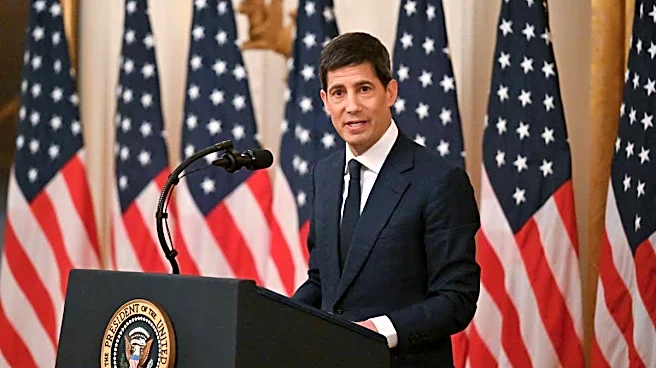
Kevin Warsh, the new Chair of the Federal Reserve, is set to preside over his first interest rate-setting meeting, where the central bank is expected to maintain current interest rates. This decision comes amidst rising inflation, partly driven by geopolitical
tensions with Iran. The recent peace deal between the U.S. and Iran, which aims to reopen the Strait of Hormuz, could potentially ease some inflationary pressures. However, the Fed faces a challenging landscape with a committee that has become more hawkish. The meeting will be crucial in understanding Warsh's stance and the Fed's future policy direction.
Why It's Important?
The Federal Reserve's decision to hold rates steady is significant as it reflects the central bank's response to ongoing inflationary pressures and geopolitical developments. The peace deal with Iran could stabilize energy prices, but the Fed's cautious approach indicates concerns about persistent inflation. This decision impacts consumer and business borrowing costs, influencing economic activity. The Fed's stance also highlights the delicate balance between economic fundamentals and political considerations, especially given President Trump's influence.
What's Next?
The Federal Reserve's future actions will depend on inflation trends and geopolitical developments. The peace deal with Iran, if successful, could lead to a stabilization of energy prices, potentially easing inflation. However, the Fed may still consider rate hikes if inflation remains high. Warsh's communication during the meeting will be critical in setting market expectations and maintaining the Fed's credibility. The central bank's forward guidance and the dot plot will be closely watched for indications of future policy shifts.