





What's Happening?
India's tourism landscape is undergoing a significant transformation, with a notable shift in visitor demographics and preferred destinations. While the Taj Mahal remains a popular attraction, drawing 550,000 foreign visitors in the year ending March
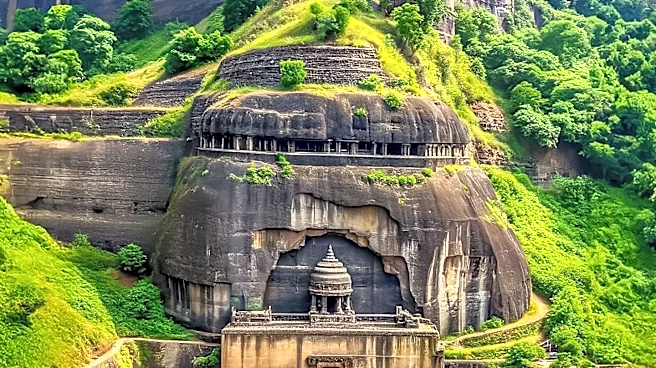
2026, this figure represents a 15 percent decrease from the previous year. Concurrently, foreign visits to Agra’s five ticketed monuments declined by 13.5 percent. In contrast, Buddhist sites such as Nalanda, Sarnath, and Shravasti experienced a 20 percent increase in foreign visitors during the same period, totaling nearly 270,000, surpassing the number of visitors to Agra Fort. This change is also reflected in state data, which indicates increased foreign visits to Goa, Kerala, and Tamil Nadu, while Rajasthan saw a decline. The traditional 'Golden Triangle' of Delhi, Agra, and Jaipur is no longer the sole focus of the tourist narrative, as three-quarters of international visitors now enter India through five major airports, with over one-third arriving via Delhi.
Why It's Important?
This evolving tourism trend has significant implications for India's economy and its global positioning as a tourist destination. Tourism, as a service export, is crucial for generating foreign exchange without the need for physical shipments, supporting investment, employment, and long-term economic growth. The decline in visits to traditional sites like the Taj Mahal, coupled with the rise of Buddhist circuit tourism, suggests a need for re-evaluation of marketing strategies and infrastructure development. The shift also highlights the growing importance of 'VFR' (visiting friends and relatives) travel, particularly from the Indian diaspora, which now accounts for a substantial portion of international arrivals. This segment, characterized by loyalty and longer stays, presents a stable but distinct economic impact compared to conventional tourists. The overall tourism balance has also shifted, with a $7.8 billion surplus in 2019 turning into a $3.8 billion deficit by 2025, indicating a decrease in foreign tourist spending or a change in the financial contribution of different visitor segments.
What's Next?
To address the changing dynamics, India's tourism strategy will likely focus on several key areas. There will be an emphasis on encouraging the diaspora to explore destinations beyond Delhi and Agra, with a strategic promotion of the Buddhist circuit. Medical tourism, particularly targeting Africa where patient numbers increased by nearly 20 percent last year, is also expected to be a growth area. For the 5.7 million conventional tourists, efforts will be directed towards making visas more accessible, improving connectivity to smaller cities, and sustaining global marketing campaigns. The government will need to clarify why tourism earnings decreased despite an increase in arrivals from outside Bangladesh, to accurately assess the economic impact and formulate effective recovery plans. This will involve a deeper analysis of visitor spending patterns and the financial contributions of different tourist segments.
Beyond the Headlines
The nuanced shift in India's tourism narrative reveals deeper cultural and economic implications. The increasing proportion of Indian nationals residing abroad returning home, often for family visits, underscores the strength of India's diaspora and its role in the 'homecoming economy.' This phenomenon, while providing a stable base for tourism, also means that the segment of conventional foreign tourists without familial ties is smaller than overall figures suggest. The rise of Buddhist sites indicates a growing interest in spiritual and cultural tourism, potentially attracting a different demographic of travelers seeking immersive experiences. The decline in foreign tourist arrivals from Bangladesh due to political turmoil highlights the vulnerability of tourism to regional geopolitical factors. This complex interplay of diaspora engagement, evolving cultural interests, and external influences necessitates a multi-faceted approach to tourism development that goes beyond traditional marketing to embrace diverse visitor motivations and regional specificities.