




What's Happening?
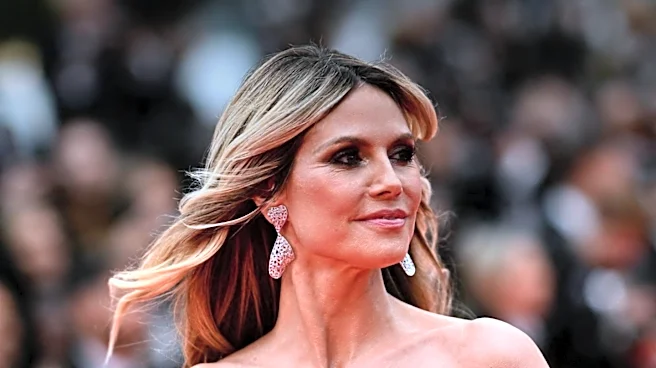
s.Oliver has launched a new marketing campaign titled 'Casual Since Forever,' featuring model Heidi Klum. The campaign uniquely brings together the present-day Heidi Klum with an AI-generated younger version of herself from the 1990s. This concept is central
to the campaign's video and imagery, aiming to illustrate themes of change and consistency, reflecting both Klum's evolution and s.Oliver's brand identity. The 1990s setting is significant as it marks the beginning of Klum's career and aligns with the brand's Vintage Collection, which reinterprets typical 90s elements like sportswear-inspired looks, loose fits, denim, and prominent logos. While Klum is the brand face, she is not involved in designing the collection. The campaign seeks to generate attention and drive sales by connecting emotional storytelling with direct product presentation and purchasing options, including a sweepstakes for card members.
Why It's Important?
This campaign is significant for its innovative use of artificial intelligence in advertising, showcasing how AI can create compelling visual narratives by digitally reconstructing past versions of public figures. It highlights a growing trend in marketing where technology is leveraged to evoke nostalgia and create unique, attention-grabbing content. For s.Oliver, it's an attempt to reinforce its brand positioning as a casual wear provider by linking its evolution to Klum's personal journey. The campaign's success could influence other brands to explore similar AI-driven strategies, potentially setting new standards for celebrity endorsements and brand storytelling. However, it also raises questions about authenticity and transparency in advertising, particularly regarding the clear labeling of AI-generated content to distinguish it from historical documentation.
What's Next?
The 'Casual Since Forever' campaign will continue to roll out across various platforms, with s.Oliver monitoring its effectiveness in driving both brand engagement and sales. The brand's approach of integrating product information and purchasing options directly with the emotional narrative suggests a focus on measurable outcomes. Other fashion brands will likely observe the campaign's reception to assess the viability and impact of using AI to create 'younger' versions of celebrities. This could lead to an increase in AI-powered nostalgic marketing efforts across the industry. Furthermore, discussions around the ethical implications of AI in advertising, particularly concerning the clear disclosure of synthetic media, may intensify, potentially leading to industry guidelines or consumer expectations for greater transparency.
Beyond the Headlines
The campaign delves into deeper implications regarding the perception of authenticity in an increasingly digital world. By artificially creating a younger Heidi Klum, s.Oliver blurs the lines between genuine historical representation and manufactured nostalgia. While the campaign explicitly labels the AI-generated content, it prompts a broader conversation about how consumers interpret and trust visual media, especially when it involves public figures. This trend could lead to a re-evaluation of what constitutes 'real' in advertising and how brands can maintain credibility while employing advanced technological tools. Moreover, the campaign's reliance on 90s nostalgia reflects a cultural phenomenon where past eras are idealized and commodified, raising questions about how historical periods are selectively presented for commercial purposes, often omitting less attractive aspects for a more marketable narrative.