
What's Happening?
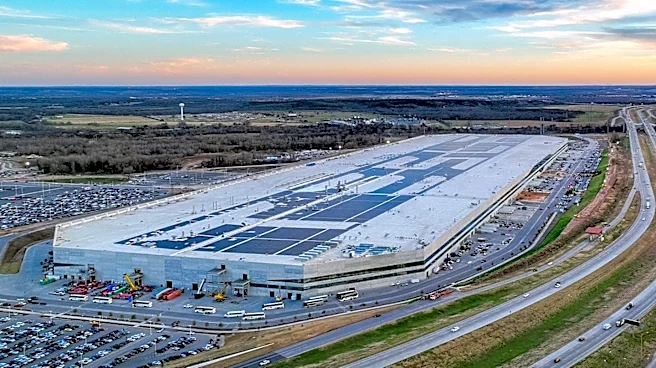
TSMC, the world's largest custom semiconductor manufacturer, is reportedly exploring the construction of a new large manufacturing facility in Texas. This potential expansion aims to strengthen its U.S.
presence and address the increasing demand for advanced artificial intelligence chips. The plans are currently in their preliminary stages and are largely dependent on the U.S. Congress extending a 35% manufacturing tax break. This tax incentive is tied to the commencement of relevant work by the end of December. Without this extension, the economic viability of such a significant investment could be altered. Each new semiconductor manufacturing facility, or 'fab,' can require an investment of at least $20 billion, meaning a multi-unit facility could cost tens of billions. This potential Texas site would complement TSMC's existing extensive investment program in Arizona, where the company has committed approximately $265 billion for ten manufacturing plants, two advanced chip packaging facilities, and a research center.
Why It's Important?
This potential investment by TSMC in Texas is crucial for several reasons, primarily impacting U.S. economic security and technological autonomy. The construction of advanced semiconductor facilities within the U.S. is a key component of the nation's strategy to boost domestic chip production and reduce reliance on foreign supply chains, particularly from Asia. The chips produced are vital for AI accelerators, data centers, and high-performance computing systems, which are central to the ongoing technological competition among companies and nations. By bringing production closer to the U.S. market, the country can mitigate supply chain risks and enhance its capacity for critical components. The decision hinges on U.S. tax policy, highlighting how government incentives play a significant role in attracting strategic industries. The move would also further solidify Texas's position as a semiconductor hub, building on the existing presence of companies like Samsung and Texas Instruments.
What's Next?
The immediate next step involves the U.S. Congress's decision regarding the extension of the 35% manufacturing tax break. Senators Mike Crapo and Ron Wyden have expressed commitment to reaching an agreement on this regulation, but its extension within the year is not guaranteed, creating uncertainty for TSMC's plans. If the tax incentive is extended, TSMC may proceed with more concrete plans for the Texas facility. Conversely, a failure to extend the tax break could significantly alter the economic landscape for the investment, potentially leading TSMC to reconsider or delay its plans. The company has not officially confirmed these plans, indicating that various options for international production capacity expansion are still under consideration, including Singapore. The outcome of this legislative decision will directly influence the timeline and scope of TSMC's potential expansion in Texas.
Beyond the Headlines
Beyond the immediate economic and political implications, TSMC's potential Texas expansion underscores a broader global shift towards reshoring critical manufacturing capabilities. The emphasis on domestic semiconductor production reflects a growing awareness of the geopolitical risks associated with concentrated supply chains, particularly in a sector as strategically vital as advanced chips. This move is not just about manufacturing; it's about national security, technological leadership, and economic resilience. While the U.S. aims to attract cutting-edge production, TSMC still maintains its most advanced research and manufacturing operations in Taiwan, indicating that a complete shift of all advanced technologies is a long-term endeavor. The competition for semiconductor investments is global, with regions like Europe also offering significant incentives, highlighting the intense strategic importance placed on this industry worldwide.