






What's Happening?
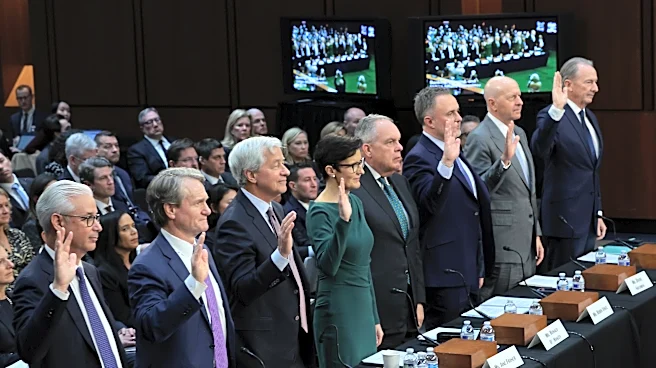
Brian Moynihan, CEO of Bank of America, has publicly expressed concerns regarding yield-bearing stablecoins, arguing that they could potentially draw billions of dollars in deposits away from the traditional banking system. This issue has become a point
of contention between banks and the crypto industry, contributing to broader discussions surrounding legislation like the Clarity Act. Moynihan emphasized the importance of the U.S. community banking system as the world's largest distributed liquidity pool, questioning the rationale behind abandoning it. He also highlighted liquidity and redemption into trusted cash as significant future challenges posed by stablecoins. While non-bank entities like Tether and Circle have dominated the stablecoin market with products used for trading, payments, and on-chain liquidity, banks have primarily introduced tokenized deposits, such as JPMorgan's JPM Coin, which represent existing U.S. dollar deposits and are typically restricted to vetted institutional clients.
Why It's Important?
Moynihan's concerns underscore a fundamental challenge that the rise of stablecoins presents to the traditional banking model. The potential for yield-bearing stablecoins to attract deposits could impact banks' funding costs and their ability to lend, thereby affecting the broader economy. This debate highlights the tension between financial innovation in the crypto space and the established regulatory frameworks and operational structures of conventional banking. The distinction between non-bank-issued stablecoins and bank-issued tokenized deposits is crucial, as it reflects differing approaches to digital assets and their integration into the financial system. The outcome of this competition could redefine how liquidity is managed, how payments are processed, and where consumers and institutions choose to hold their funds, potentially leading to significant shifts in market power and regulatory oversight within the U.S. financial landscape.
What's Next?
The discussion surrounding stablecoins is expected to continue, with ongoing debates about whether bank-issued and non-bank-issued models can coexist or if one will ultimately dominate. Experts suggest that both models may serve different purposes, with banks offering compliance and risk management expertise, while non-bank issuers provide innovation and speed. There is a growing call for banks to engage with this technology, as sitting out is not considered a viable strategy given the trillions in stablecoin transaction volume already occurring outside the traditional system. Education is identified as a key gap, with recommendations for stakeholders to engage with those actively using stablecoins and to conduct pilot programs to measure success. The future will likely involve continued efforts to integrate digital assets within regulatory guardrails, potentially through partnerships between financial institutions and fintech companies, to leverage the benefits of programmable capabilities while maintaining trust and stability.
Beyond the Headlines
The emergence of stablecoins and the banking sector's reaction to them reveal deeper implications for monetary policy and financial sovereignty. As noted by some experts, stablecoins can be seen as a natural extension of the U.S. dollar, potentially expanding its global influence and affecting demand for U.S. Treasuries if reserves are held in dollar-denominated stablecoins. Conversely, widespread use of stablecoins in other countries could reduce the ability of foreign governments to exercise monetary policy. This geopolitical dimension adds another layer of complexity to the debate, suggesting that the adoption and regulation of stablecoins are not just economic or technological issues but also matters of national interest. The challenge for banks is not merely technological but also a mindset shift, requiring them to adapt to new tools and ecosystems while navigating existing regulatory frameworks and maintaining public trust.