





What's Happening?
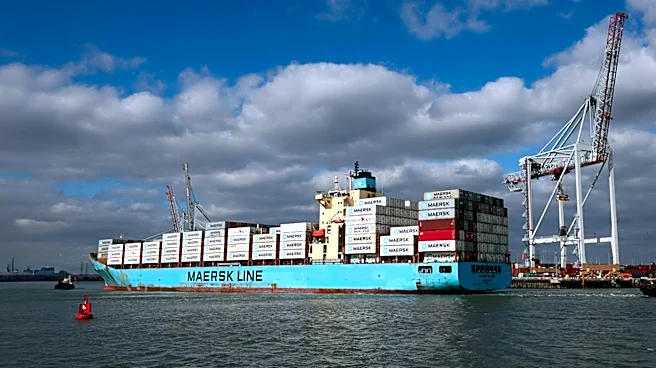
The Port of Barcelona recently welcomed the container ship 'Barcelona Maersk' on its maiden call, a symbolic event for the vessel named after the Catalan capital. This ship is one of the most modern in the Maersk fleet, operating on a route connecting
Europe and Southeast Asia. The 'Barcelona Maersk' called at APM Terminals Barcelona to load and unload containers before continuing its journey towards Italy and then through the Suez Canal back to Asia. To commemorate this first visit, the President of the Port of Barcelona, José Alberto Carbonell, presented a commemorative plaque to the ship's captain. The ceremony was also attended by Jordi Valls, Barcelona City Council's Fourth Deputy Mayor for Economy, Finance, Economic Promotion and Tourism, and other key figures from the Port and Maersk. The vessel has a capacity of 17,480 TEUs and is equipped with dual-fuel engines that allow it to run on green methanol, significantly reducing greenhouse gas emissions.
Why It's Important?
The maiden call of the 'Barcelona Maersk' at the Port of Barcelona underscores a significant advancement in sustainable maritime transport, which has broad implications for global trade and environmental policy. The vessel's ability to operate on green methanol, generating 90% fewer greenhouse gas emissions than conventional fossil fuels, positions it as a leader in the decarbonization efforts within the shipping industry. This development is crucial for U.S. businesses involved in international trade, as it signals a growing trend towards environmentally friendly logistics. As global regulations on emissions become stricter, companies that adopt such sustainable shipping practices will likely gain a competitive advantage, potentially influencing supply chain decisions and consumer preferences. The Port of Barcelona's role as a hub on major maritime routes, reinforced by this event, highlights the increasing importance of strategic port infrastructure that can accommodate advanced, eco-friendly vessels. This move could also inspire other ports and shipping companies to invest in similar green technologies, driving a broader shift towards a more sustainable global economy.
What's Next?
The introduction of vessels like the 'Barcelona Maersk' signals a clear direction for the future of maritime transport, with a strong emphasis on sustainability. Maersk's commitment to dual-fuel engines capable of running on green methanol sets a precedent for other shipping companies to follow, potentially accelerating the adoption of alternative fuels across the industry. This will likely lead to increased demand for green methanol production and infrastructure, creating new investment opportunities and technological advancements in the energy sector. For ports worldwide, including those in the U.S., the ability to accommodate and service such advanced vessels will become increasingly important, necessitating upgrades in bunkering facilities and operational protocols. The Port of Barcelona's alignment with Maersk's sustainability objectives suggests a collaborative effort between shipping lines and port authorities to achieve shared environmental goals. This trend is expected to continue, with more stringent environmental regulations and consumer demand for sustainable logistics driving further innovation and investment in green shipping technologies.
Beyond the Headlines
The 'Barcelona Maersk' and its green methanol technology represent more than just an operational upgrade; they symbolize a profound shift in the maritime industry's ethical and environmental responsibilities. The move towards significantly reduced greenhouse gas emissions addresses critical global climate change concerns, highlighting the industry's role in mitigating environmental impact. This development also brings to the forefront the concept of 'green shipping corridors' and the broader push for a circular economy within logistics. The ethical dimension lies in the industry's commitment to future generations, ensuring that global trade can continue without compromising ecological health. Culturally, this shift could redefine the image of shipping from a major polluter to a leader in environmental stewardship. Legally, it anticipates and potentially influences international maritime regulations, pushing for higher standards of environmental performance. The long-term implication is a potential re-evaluation of global supply chains, prioritizing partners and routes that demonstrate a strong commitment to sustainability, thereby fostering a more responsible and environmentally conscious global economy.