


What's Happening?
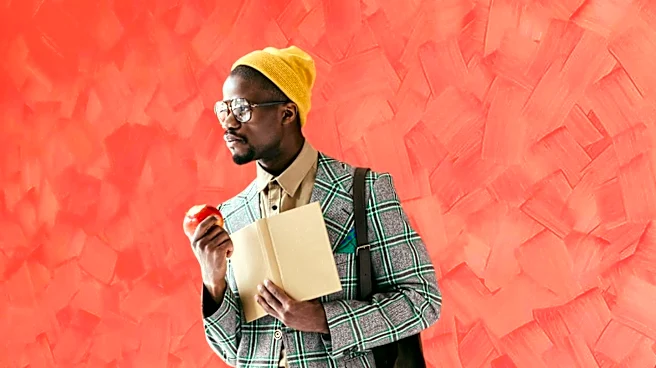
The SS27 menswear collections showcased in Milan and Paris have highlighted a vibrant, colorful preppy aesthetic. Designers such as Thom Browne and Polo Ralph Lauren have reimagined traditional preppy styles with bold colors and patterns. Thom Browne's
collection featured tailored styles in vivid madras and graphic-check wools, while Polo Ralph Lauren leaned into vibrant hues and playful prints. This trend marks a shift from luxury activewear to a fusion of relaxed American style and classic European tailoring. Other brands like Louis Vuitton, Kenzo, and Sacai also contributed to this colorful theme, mixing bright tops and outerwear with neutral khaki pants and shorts.
Why It's Important?
The emergence of the colorful preppy aesthetic in menswear signifies a broader shift in fashion trends, moving away from the dominance of luxury activewear. This change reflects a renewed interest in traditional styles infused with modern vibrancy, appealing to a diverse consumer base seeking both comfort and style. The trend could influence retail strategies, encouraging brands to explore bolder color palettes and innovative designs. It also highlights the fashion industry's adaptability and its ability to reinvent classic styles to meet contemporary tastes, potentially impacting sales and consumer engagement in the fashion sector.
What's Next?
As the colorful preppy aesthetic gains traction, fashion brands may continue to explore and expand this trend in upcoming collections. Retailers might adjust their inventory to include more vibrant and preppy styles, anticipating consumer demand. Fashion weeks and industry events will likely showcase further iterations of this trend, influencing global fashion markets. Designers may also collaborate with other sectors, such as technology and sustainability, to innovate within this aesthetic, potentially leading to new materials and production methods that align with environmental goals.
Beyond the Headlines
The colorful preppy trend could have cultural implications, as it challenges traditional notions of masculinity in fashion by embracing bold colors and patterns. This shift may encourage more inclusive and diverse representations in menswear, promoting self-expression and individuality. Additionally, the trend's emphasis on color and pattern could inspire other creative industries, such as interior design and visual arts, to adopt similar aesthetics, fostering a broader cultural movement towards vibrancy and creativity.