







What's Happening?
Bernie Brzostek, a career auctioneer with over 8,700 real estate and personal property auctions to his name since 1973, is putting his own family home in Baldwinsville, New York, up for auction on October 11, 2026. The starting bid for the property is set
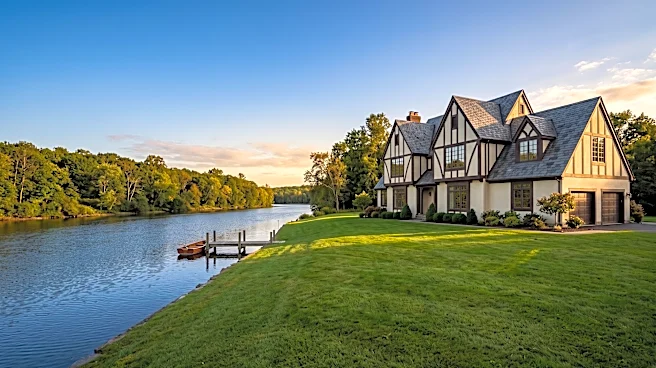
at just $1. Brzostek and his wife, Wendy, are retiring after 53 years in the auction business and plan to move south to be closer to their four daughters and grandchildren. Their Tudor-style home, where they have lived for over 35 years, spans 2,800 square feet, features four bedrooms, three full baths, and an attached two-car garage. It is situated on a 1-acre waterfront lot along the Seneca River, part of the Erie Canal system, offering direct boat access to the Atlantic Ocean. Brzostek emphasizes that this unreserved public auction method, which sells to the highest bidder regardless of the final price, is designed to attract numerous buyers and often results in a higher-than-expected selling price, despite the initial low bid. He notes that while sellers can reject an 'insultingly low' final bid, a fee is incurred in such cases.
Why It's Important?
This event highlights an alternative and potentially accelerated method for selling real estate in the U.S. market, contrasting with traditional brokerage practices. Brzostek's decision to use an unreserved public auction for his own home, with a symbolic $1 starting bid, demonstrates confidence in the auction model's ability to generate competitive bidding and achieve market value. This approach could influence other homeowners and real estate professionals to consider auctions, particularly in markets where sellers seek a quicker sale or believe their property has unique appeal that could drive up bids. The strategy of a low starting bid is designed to create significant interest and urgency among potential buyers, forcing them into a direct bidding competition. This method also offers sellers more control over the sale timeline, including setting open house dates and closing terms, which can be advantageous for those with specific relocation plans. The success of this auction could serve as a case study for the broader adoption of unreserved real estate auctions, potentially shifting perceptions of property sales from a lengthy negotiation process to a more dynamic, event-driven transaction.
What's Next?
The auction for the Brzostek family home is scheduled for October 11, 2026, at 1 p.m. Leading up to this date, potential buyers will need to plan to attend open houses or private showings, arrange financing, and consult with legal advisors to prepare for bidding. Brzostek's Real Estate Auction Co. will continue its comprehensive advertising efforts across various platforms, including their website, other real estate sites, social media, and press releases, to maximize exposure and attract bidders. On the day of the auction, the bidding battle will take place, typically lasting less than an hour. The winning bidder will be required to place a 10% nonrefundable deposit immediately, followed by another 10% nonrefundable deposit within three business days, with the remaining 80% balance due at closing. The outcome of this high-profile auction, particularly the final sale price compared to the estimated market value of $552,200, will be closely watched as an indicator of the effectiveness of the unreserved auction strategy.
Beyond the Headlines
The use of a $1 starting bid in a real estate auction, while a marketing tactic, taps into a psychological aspect of consumer behavior: the allure of perceived value. This strategy aims to draw a larger pool of interested parties who might otherwise be deterred by a higher initial asking price, creating a competitive environment that often drives the final bid well above expectations. This approach challenges the conventional wisdom in real estate that a higher initial price signals greater value. Furthermore, the Brzosteks' decision to auction their long-time family home for retirement underscores a broader trend of individuals leveraging specialized expertise in their personal lives. Their confidence in the auction process, honed over decades, reflects a belief in its efficiency and fairness in achieving true market value. This event could also spark discussions about the transparency and accessibility of real estate transactions, as public auctions offer an equal opportunity for all qualified bidders, potentially reducing the perceived opaqueness of traditional sales processes.