




What's Happening?
The International Olive Council (IOC) participated in a series of events in New York from November 16 to 18 to commemorate the first United Nations International Day of the Mediterranean Diet. This global observance, proclaimed by the UN General Assembly,
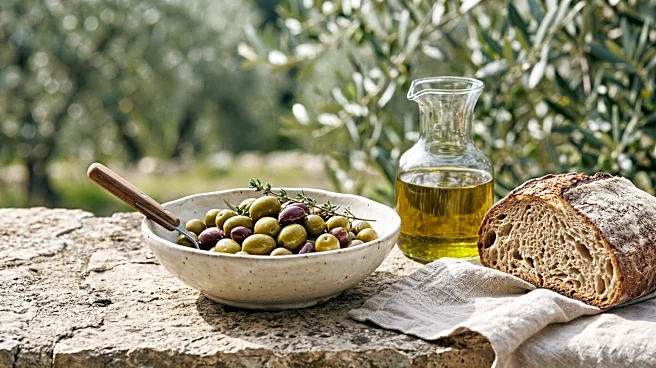
recognizes the health, cultural, and environmental significance of the Mediterranean dietary pattern, with olive oil as a central component. IOC Executive Director Jaime Lillo and Head of Standardisation and Research Unit Mercedes Fernández represented the organization. Their activities included participating in 'Tomorrow Tastes Mediterranean' at the Culinary Institute of America, where Mr. Lillo joined a panel discussing food's role in peace and social resilience. They also attended an event at the United Nations Headquarters, organized by the Permanent Mission of Italy, for the debut of the IOC documentary 'The Olive Tree’s Legacy,' which highlights international scientific cooperation in safeguarding olive genetic resources. The delegation concluded their visit with a meeting at the City College of New York to strengthen institutional and scientific ties, with plans for a cooperation agreement.
Why It's Important?
The IOC's active participation in these New York events underscores the growing international recognition of the Mediterranean diet's benefits, particularly in the U.S. context where dietary patterns significantly impact public health. By promoting olive oil as a cornerstone of this diet, the IOC aims to influence dietary choices and public health initiatives. The discussions on food's role in peace and social cohesion, held at institutions like the Culinary Institute of America, highlight the broader societal implications of food systems beyond nutrition. Furthermore, the documentary on olive biodiversity conservation presented at the UN emphasizes the importance of sustainable agriculture and genetic preservation, issues that resonate with global efforts to address climate change and food security. Strengthening scientific cooperation with U.S. academic institutions like the City College of New York can foster further research and knowledge exchange, potentially impacting nutritional guidelines and agricultural practices within the U.S.
What's Next?
Following these celebratory events, the IOC plans to continue its efforts in promoting the Mediterranean diet and olive oil globally. The planned cooperation agreement with the City College of New York indicates future collaborative research and knowledge exchange initiatives, which could lead to new scientific findings and educational programs related to nutrition and olive oil quality. The IOC will also continue to leverage its Olive Health Information System (OHIS) to disseminate scientific evidence on the health benefits of olive products to health professionals and the public. The organization's ongoing participation in international events and scientific partnerships suggests a sustained commitment to advocating for the Mediterranean diet's role in healthy and sustainable lifestyles, potentially influencing dietary recommendations and public awareness campaigns in the U.S. and beyond.
Beyond the Headlines
The celebration of the International Day of the Mediterranean Diet in New York extends beyond mere dietary recommendations; it touches upon deeper cultural, environmental, and diplomatic dimensions. The emphasis on food as a tool for peace and social resilience, as discussed at the Culinary Institute of America, highlights the often-underestimated role of gastronomy in international relations and community building. The IOC's documentary on olive biodiversity underscores the critical link between cultural heritage, agricultural practices, and environmental sustainability, suggesting a long-term shift towards valuing traditional food systems for their ecological benefits. This initiative also subtly promotes a globalized understanding of health, where dietary patterns are viewed not just through individual choices but as interconnected with broader ecological and socio-political landscapes. The engagement with U.S. institutions signifies a strategic effort to integrate these broader perspectives into American discourse on health and sustainability.