




What's Happening?
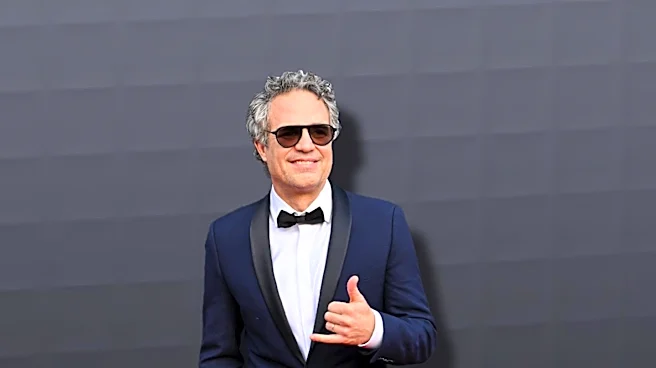
More than 180 Jewish figures from the entertainment industry and beyond have signed a letter in support of actor Mark Ruffalo, asserting he is the target of a 'smear campaign' and 'spurious charges of antisemitism.' This comes after Paramount accused
Ruffalo of invoking 'antisemitic tropes' in connection with a business dispute. Ruffalo had criticized the Paramount-Warner Bros. merger in a social media post on August 21, accusing the Ellison family of complicity in 'genocide' against Palestinians, which he stated 'was built on an apartheid system of oppression powered by Oracle.' Prominent signatories of the letter include Joaquin Phoenix, Jonathan Glazer, Joel Coen, and Hannah Einbinder, among others.
Why It's Important?
This incident highlights the intense and often contentious debate surrounding the Israeli-Palestinian conflict within the U.S. entertainment industry and broader society. The public defense of Mark Ruffalo by a significant number of Jewish figures challenges the notion that criticism of Israeli policies automatically constitutes antisemitism, a distinction that is increasingly central to discussions on free speech and political expression. The involvement of major studios like Paramount in such accusations also underscores the pressure faced by public figures to align with certain political narratives, potentially impacting their careers and public image. This event could further polarize opinions within Hollywood and among the public, making it more difficult to engage in nuanced discussions about complex geopolitical issues without facing severe backlash.
What's Next?
The ongoing controversy could lead to further public statements and debates from both sides of the issue, potentially escalating the 'smear campaign' that Ruffalo's supporters allege. Paramount may face pressure to clarify its stance or address the concerns raised by the letter's signatories. This situation might also prompt other entertainment figures to either voice their support or opposition, further entrenching divisions. The broader implications could include a re-evaluation of how accusations of antisemitism are made and addressed within public discourse, particularly when they intersect with criticism of political actions. The entertainment industry might also see increased scrutiny regarding its internal policies on political expression and how it handles sensitive geopolitical topics.
Beyond the Headlines
The controversy surrounding Mark Ruffalo delves into the complex interplay between freedom of speech, corporate interests, and accusations of antisemitism. It raises questions about the weaponization of such accusations to silence criticism of political actions, particularly concerning the Israeli-Palestinian conflict. The letter from Jewish figures supporting Ruffalo suggests a growing internal debate within the Jewish community itself regarding the definition and application of antisemitism. This event could contribute to a broader societal shift in how these terms are understood and used, potentially leading to more nuanced discussions about the difference between anti-Jewish sentiment and legitimate criticism of state policies. It also highlights the power of social media in amplifying such disputes and the challenges public figures face in navigating politically charged topics.